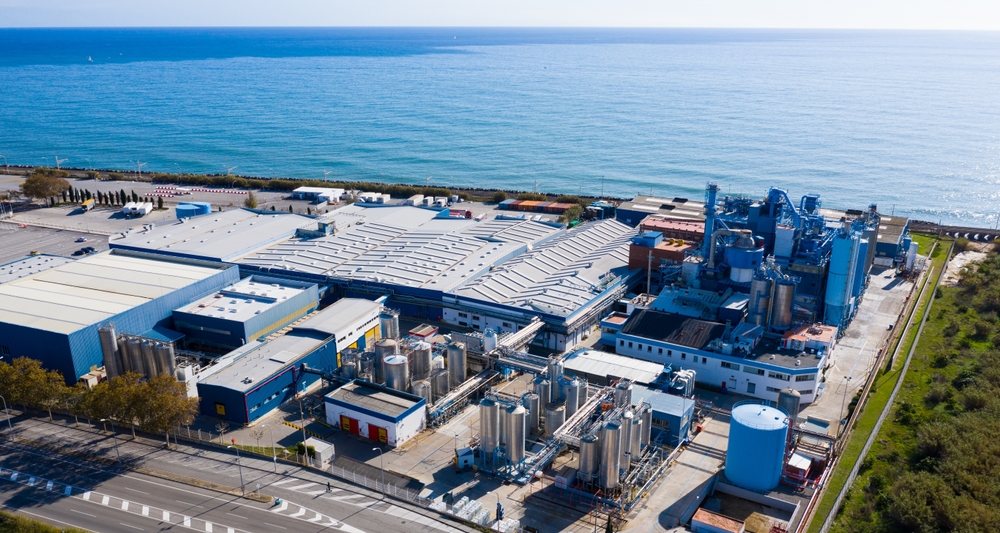
After 75 years of globalized and export-oriented manufacturing, Europe is rebuilding its industrial base, and some countries face more serious obstacles than others.
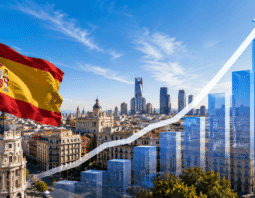
It has already been announced that within the next month, EU authorities may put into effect the Accelerated Industrial Development Act (AAI). Against this backdrop, according to Aberdeen Investments, Spain is among the countries with the most favorable conditions to benefit from the wave of reindustrialization in Europe.
Spain Among the Leaders of Europe’s Industrial Restructuring
A new analysis by Aberdeen Investments, assessing 14 European countries, shows which real estate markets are best positioned to lead Europe’s industrial restructuring, with the industrial and logistics sectors being the most suitable in this regard. Germany leads the ranking, followed by the Netherlands, the United Kingdom, France, and Spain.
The study identifies 10 key factors that significantly influence a country’s ability to meet rising demand driven by European reindustrialization trends. The analysis was carried out at a time when increased budget allocations for defense and infrastructure were seen as a fundamental factor for Europe’s economic stability, security, and growth.
Representatives of Aberdeen Investments expect more stable cash flows in the industrial and logistics sectors, higher rental growth, and urban locations near major hubs of skilled labor concentration, with higher on-site security levels. In the long term, rental growth is likely to significantly exceed inflation.
What Criteria Were Used to Assess the Countries
Aberdeen Investments’ analysis of the European industrial market classifies real estate markets according to the following categories: economic growth, economic stability, risk, liquidity, industrial sector, logistics depth, nearshoring potential, defense and security spending, e-commerce penetration, and return forecasts. Countries were rated from 5 (best) to 1 (worst) based on an assessment of current stability, defense spending, and growth potential. Each factor was based on authoritative third-party indices and externally verified datasets to ensure reliability and comparability across countries.
Who Leads the Aberdeen Investments Ranking
Germany is the undisputed leader with an average score of 4.7 and the maximum score of 5 in eight out of ten categories. The Netherlands, which ranked second, received an average score of 4.1, scoring 5 points in three out of ten categories (industrial index, logistics index, and e-commerce penetration).
The United Kingdom ranked third with an average score of 3.9, but with the maximum score of 5 in four key categories (risk management, liquidity, defense/security, and e-commerce penetration). This puts it in a favorable position to benefit from reindustrialization and strengthen ties with the rest of Europe. Although the United Kingdom received a lower score for economic stability, Oxford Economics data does not show a significant gap between the leading European economies, and in Aberdeen’s methodology the UK’s rating falls only to 2 points.
Years of hyper-globalization have made Europe vulnerable in sectors such as security, energy, chemicals, critical minerals, food, automotive manufacturing, and technology – these are the value chains that have been disrupted and now require urgent reconstruction. As a result, the continent is now facing the consequences of excessive dependence on Asia for economic resources and on the United States for security.
Six Key Areas of European Reindustrialization
Overall, six key areas of European reindustrialization have been identified:
- Security, Defense, and Technology
- governments are prioritizing the principle of “made in Europe for Europe” in order to reduce external dependence;
- increased defense budgets, supported by commitments to meet NATO defense spending targets, are stimulating the creation of new production capacities – from aircraft fuselages to missiles – and deepening clusters in Germany, France, Poland, Sweden, and the United Kingdom.
- Food and Agriculture
- greater focus on food security is accelerating the development of domestic production and processing;
- the adoption of precision farming technologies, urban agriculture, and vertical systems is boosting yields and making it possible to replace Russia as a key fertilizer supplier;
- growing demand for cold-chain storage is expanding the logistics footprint and strengthening regional distribution networks.
- Textiles and Apparel
- the relocation of core and higher-value textile production is gaining momentum as companies seek faster time to market, stability, and cleaner production within Europe;
- automation: from robotic sewing to advanced 3D printing;
- industrial initiatives and national programs are contributing to the revival of professional skills, improving opportunities for small and medium-sized enterprises, and strengthening competitive clusters in Portugal, Italy, Spain, and Poland.
- Energy and Electricity
- Europe’s rethinking of energy security is accelerating the deployment of renewable energy sources, energy storage solutions, and demand for infrastructure and equipment;
- the localization of clean technology manufacturing is crucial to the EU’s new policy framework under the Net-Zero Industry Act;
- grid reinforcement, cross-border interconnections, and the selective revival of nuclear energy require renewed production capacity to support Europe’s drive for energy stability.
- Engineering and Automotive Manufacturing
- the shift to electric vehicles and the localization of battery and semiconductor supply chains are reshaping Europe’s automotive and engineering industries;
- Industry 4.0 tools and digital twin capabilities make it possible to create flexible multi-site production networks that improve resilience and shorten development cycles;
- changes linked to the circular economy, from green steel to mandatory battery recycling, are deepening domestic supply chains and strengthening Europe’s industrial competitiveness.
- Pharmaceuticals
- the reshoring of pharmaceutical supply chains is advancing as Europe takes steps to mitigate shortages and crisis situations – such as the COVID-19 pandemic;
- supply diversification, larger stockpiles, and stronger vaccine manufacturing platforms are crucial to the resilience of this value chain;
- the growth of biologics production and advanced therapies is strengthening hubs in Germany, France, Belgium, and Ireland, while improvements are also spreading to Poland and Spain.
Read also:
- Spain – the Global Leader in Real Estate Investment Growth
- In 2026, Spain Will Remain a Priority Destination for Foreign Real Estate Investment