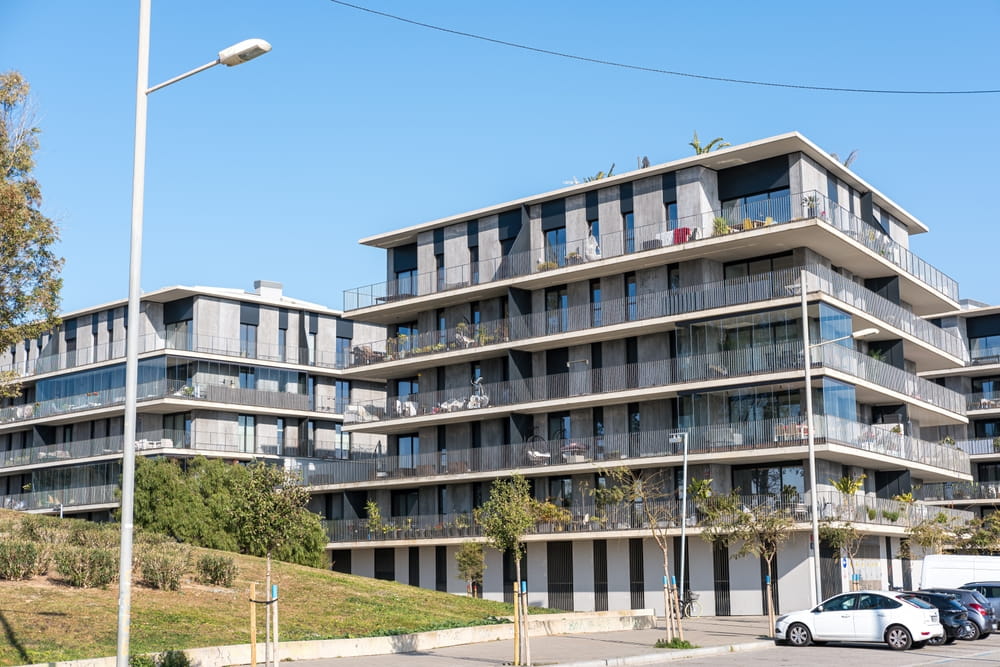
Spain increased its share of European real estate investment from 6% in 2019 to 15% in 2025. In doing so, it entered the “premier league” of the European market, according to the Spanish Association of Real Estate Consultants (ACI).
Spain’s share of European investment
ACI explains this by noting that, compared with the main eurozone markets, Spain’s share of real estate investment outperformed Germany (whose share fell from 40% to 28% over the past seven years), France (also down – from 23% to 18%) and Italy (which increased this figure, but less than Spain: from 6% to 11%). Thus, real estate consulting companies emphasize “the momentum of the Spanish market in the European context and its ability to continue attracting investment and contributing to the growth of the Spanish economy”.
They also refer to real estate investment volume of €16.928 billion in 2025, up 30% from the previous year. This figure exceeds €12.012 billion in Italy, although it remains below €20.347 billion in France and €31.008 billion in Germany.
Yield and market recovery
In addition, ACI notes that Spain offers attractive real estate yields. After the record year of 2022 and the rise in interest rates, the adjustment in real estate investment volumes in 2023 was more moderate than in the main European markets (-35% versus -54% in Germany, -46% in Italy or -42% in France), and, starting in 2024, the national market showed “a more intense recovery, consolidating high investment volumes” within the historical series.
Spain continues to maintain one of the most attractive investment profiles. In particular, office property yields in 2025 stood at 4.6% – higher than in Germany (4.3%), France (4.1%), Italy (4.1%) and the United Kingdom (3.9%). At the same time, real estate risk decreased from 2.6% in 2019 to 1.4% in 2025, reflecting investor confidence in the Spanish market.
Which segments attract the most investment
By segment, residential real estate dominates, accounting for 27% of investment in 2025, exceeding the 23% recorded collectively in the other countries analyzed. This is followed by investment in hotel assets (24% of the total compared with 9% in other European markets), reflecting the structural importance of tourism in the Spanish economy and its ability to attract foreign capital.
The remaining real estate market segments are below the averages of other European countries. For example, commercial real estate accounts for 15% of investment compared with 17% in Europe, while the gap widens in the case of offices (14% in Spain, 24% in other European countries), as well as logistics and industrial real estate (8% compared with 20%).