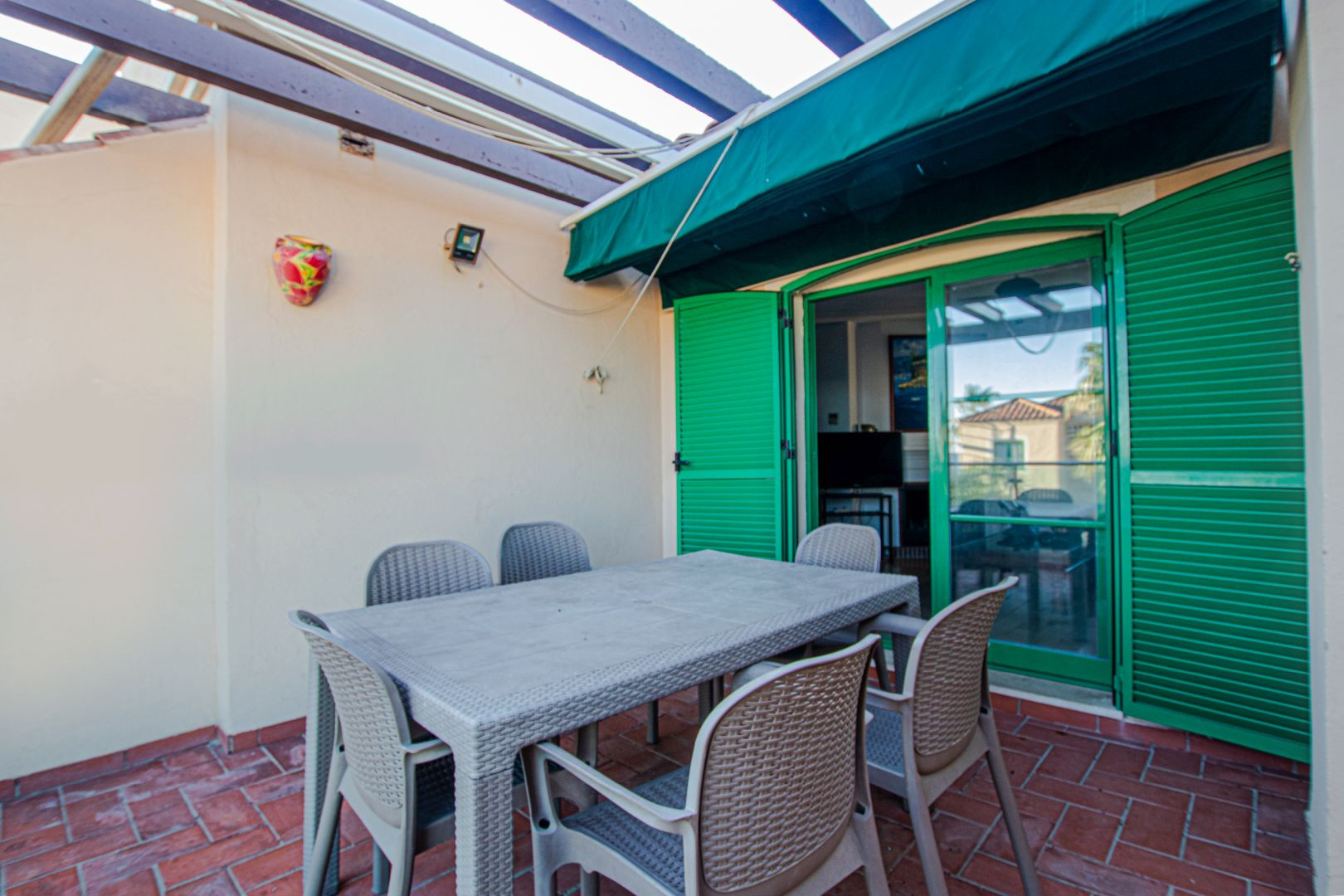
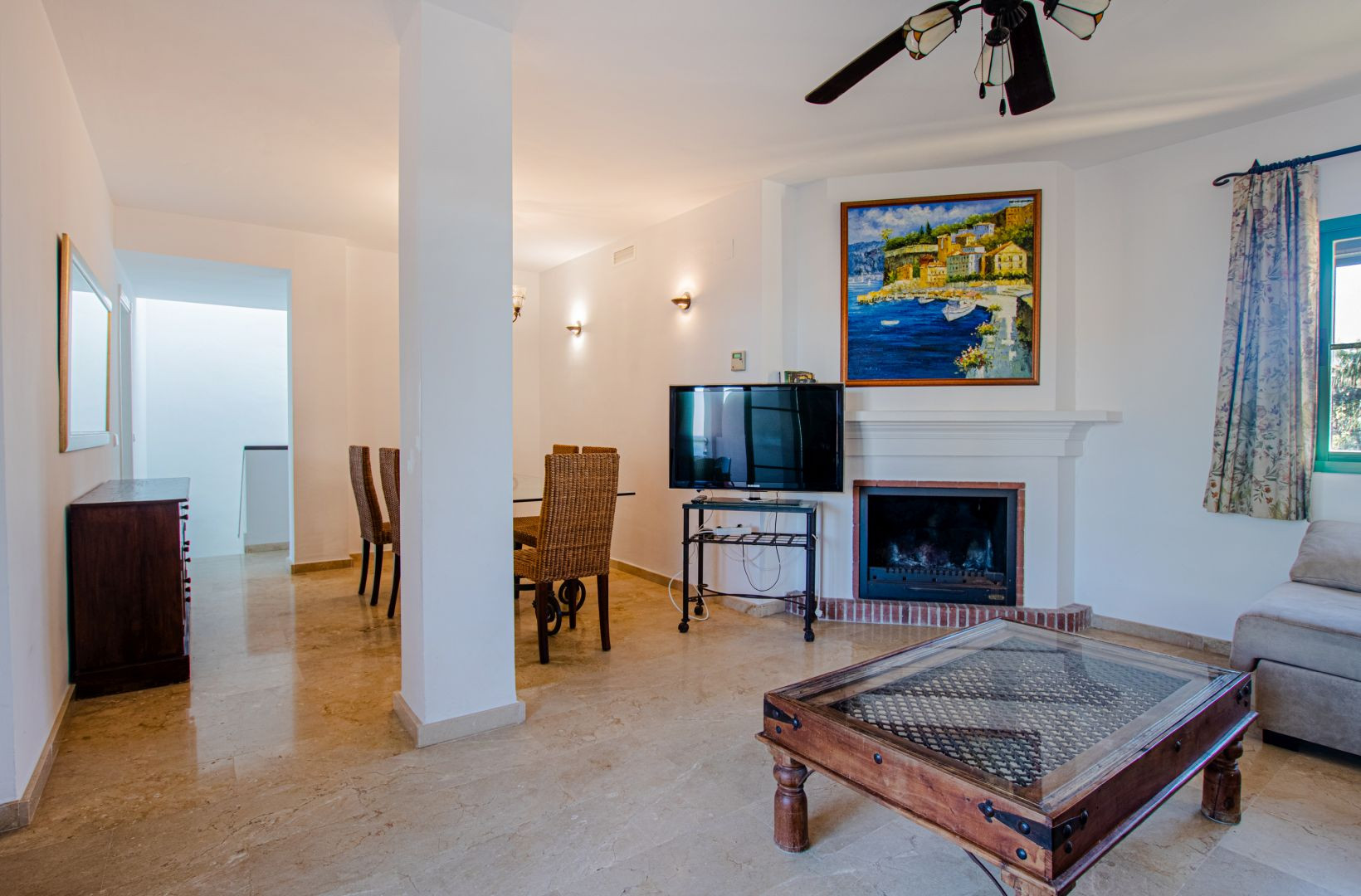
Moraira is a small resort village in the north of the Costa Blanca (the area of Marina Alta), which has been actively built up in recent years and has the status of a luxury real estate hub in the region. Administratively, Moraira belongs to the municipality of Teulada, being located just 6 km from its center on the very seashore. The dual name of the municipality – Teulada-Moraira can also often be found.
The Population of Moraira and How to Get There
The distance from Moraira to the nearest airports and major cities is:
- Elche-Alicante International Airport – 95 km,
- Valencia International Airport – 128 km,
- Alicante and the central railway station – 81 km,
- Denia and the port where ferries regularly depart to the Balearic Islands – 23 km,
- Calpe – 13 km,
- Altea – 25 km,
- Benidorm – 41 km.
Teulada is connected to neighboring cities by the N-332 national highway, and in turn, Teulada and Moraira are connected by the CV-743 highway. Also, in the vicinity of Teulada, there are convenient exits to the AP-7 (E-15) highway.
According to statistics, slightly more than 1.5 thousand inhabitants are registered in Moraira itself, and in general, in the municipality of Teulada-Moraira – there are about 14 thousand inhabitants (2022), most of whom are foreigners (mainly Europeans). During the holiday season, the population in this part of the coast increases by 2-3 times. In recent years, there is an influx of tourists – not only in the high season, but also in the off-season and even in winter – primarily thanks to the mild and comfortable climate.
Climate in Moraira
The mild and incredibly comfortable climate of the northern part of the Costa Blanca is noted by everyone who had a chance to relax or live here at different times of year. Summer in Moraira is very warm from June to mid-July and hot in the remaining period until the end of August – early September. The water near the coast warms up quickly, the swimming season lasts from May to October. The autumn velvet season and spring are very warm and have low rainfall. In winter, the weather can be more windy and rainy, but even in the coldest months (December, January and February), the daytime temperature rarely drops below + 15ºС, and in a south and southeast wind that brings warm air from Africa, the temperature can rise and up to +25ºС.
Thus, in Moraira you can comfortably spend not only summer, but also winter and off-season. A leisurely beach holiday is perfectly complemented by outdoor sports. Hiking, cycling, climbing, tennis, swimming, sailing – everyone can choose an activity to their liking. In the vicinity of Moraira, there are many interesting hiking trails of various lengths and degrees of complexity: some of them run along the coast, the other part is located in the mountains.
The History of Moraira
The history of Moraira and Teulada goes back centuries. Since ancient times, this part of the coast has been inhabited – first by the Iberian tribes, then by the Romans, Muslims and, finally, Christians.
At the beginning of the XX century, archaeological finds were discovered in the cave – La Cova de les Cendres. In particular, there were fragments of ceramics, attributed by scientists to the Neolithic era. Today, la Cova de les Cendres is considered one of the most important archaeological centers in the entire Iberian Peninsula.
Centuries passed, peoples changed on the territory of modern Moraira, but agriculture and fishing remained the main occupation. In the Middle Ages, which was the heyday of the pirate era, the construction of protective structures was actively carried out in Moraira and its environs: fortresses, castles, towers were used to make observations of the dangerous sea, and at any moment, they were ready to place the inhabitants of the surrounding villages under their protection.
At the end of the XX century, tourism and construction were added to agriculture and fisheries. And today, in the vicinity of Moraira and Teulada, more than half of the farmland is occupied by vineyards descending by terraces from hillsides. One of the most famous Valencian liqueurs – Mistela is made from Alexandrian Muscat (Moscatel Alejandría).
The 80-s of the last century were a peak of tourism: Europeans discovered the Costa Blanca with its fantastic beaches, warm sea, excellent cuisine and cheapness of the whole. Following the tourism sector, the construction sector has also become more active. Moreover, in contrast to the southern part of the Costa Blanca, the bet of Moraira and Teulada was made on high-quality individual housing, the integration of the residential sector into the surrounding nature and the creation of an atmosphere of a fashionable resort.
The goals were successfully achieved, and today Moraira is often compared with Nice, and it is recognized as the most expensive and elite resort in the province of Alicante.
Attractions of Moraira
The main attraction of the town is the castle of Castillo de Moraira, towering on the very shore, and the watchtower of Cap d’Or. From the north, the port adjoins the castle, and from the south – there is a sandy beach of L’Ampolla. Magnificent views of the sea and the coast are offered from the territory of the castle. Initially, it was believed that it was built in the XVI century, but today, the official year of completion of construction is 1742 – this is the year indicated on the Bourbon family coat of arms above the main entrance.
Among the architectural sights of Moraira, it is also worth noting the chapel of Ermita de la Font Santa dating back to the XIX century, and located approximately halfway between Moraira and Teulada.
None of modern resorts can not do without its own port. The yacht marina of Moraira with 620 berthing spaces is considered one of the best in the region. Near the marina, there is a yacht club, founded in 1975, which operates an excellent restaurant serving seafood and Mediterranean cuisine. The club has a sailing school, as well as various sports competitions and regattas are held here. The most famous regattas are «300 Millas a Tres» and «Moraira Santa Eulalia».
There is also a fishing port in Moraira, where the fish exchange operates daily and from where the fresh catch goes directly to the kitchens of the best local restaurants. Among them, there are Restaurante Sand, located in the hotel La Sort and noted in the Michelin guide, as well as restaurants Kosta, Zibâ Life and Maxim are worth noting.
Among natural attractions, the nearest and main one is Cape D’Or, which has had the status of a micro-reserve since 2002. There are also caves of Cova de les Cendres and Cova de les Rates on its territory.
In the town itself, next to the beach, there is another natural reserve – Marjal del Senillar. It is a chain of lakes, separated from L’Ampolla beach by a sand embankment. Marjal del Senillar is a favorite nesting place for many bird species. Also, various representatives of flora and fauna can be met here.
Moraira’s Nature and Hiking Trails
Moraira and the surrounding area are the best for hiking. In this part of the coast, there are routes that are suitable for both beginners and experienced athletes. The most popular are:
- Ruta de los Acantilados is a non-circular route starting in Cala del Moraig (Benitachell) and ending in Cala Llebeig (Moraira). The trail runs along a cliff above the sea, the length of the way there and back is about 9 km, the walk takes about 2 hours. The route is considered of medium difficulty.
- Los Miradores del Litoral is a non-circular route, originating near El Portet beach in Moraira and then following from one observation deck to another. The route passes through Cala Portitxol, Castillo de Moraira, Les Tosquetes i L´Ampolla and l´Andragó. In total, you will have to hike about 5 km one-way, the walk will take about 1 hour.
- Font Santa is a non-circular route passing through two springs: La Font de Jana and La Font Santa.
- Moli dels Castellons is a short non-circular route less than 1.5 km long. It leads to one of the five windmills that once towered over the town. The route is easy and takes about 20 minutes.
- Barranc de la Viuda – Cala Llebeig – Cala Moraig is a rather complicated non-circular route with a length of 10.9 kilometers. One-way trip takes about 2 hours.
In addition to the listed routes, there are at least two dozen more. These routes can be combined, merged, and looped. Some of them require a good physical training. Obviously, things are going well with the organization of active leisure in Moraira.
The Beaches of Moraira
The coast of Moraira is a series of sandy beaches and rocky bays, stretching for 8 km from south to north. These beaches are annually awarded by Blue Flag – the European mark of cleanliness and quality, as well as by the “Q” mark from the Institute for Spanish Tourism Quality (ICTE).
- Cala Llebeig is a hard-to-reach secluded bay with emerald water. There is no direct approach by car: you will have to walk part of the way to the bay.
- Cala Cap Blanc is a small bay, which has a second name – Punta Estrella. It is quite secluded, deep, very popular with diving and snorkeling enthusiasts.
- Cala L´Andragó is a rocky cove with crystal-clear waters. Nearby there are several excellent fish restaurants.
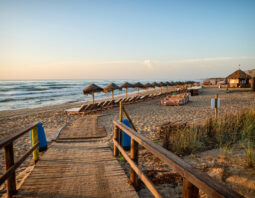
- Les Platgetes is a 200-meter long sandy beach, including two bays. The beach has all necessary services, bio-toilets, wooden paths, parking, umbrella and lounge chair rentals. During the high season, lifeguards are on duty at the beach .
- Playa de L´Ampolla is Moraira’s most popular beach, which has a length of 400 m. It is an urban beach with fine golden sand. Nearby there is parking, and all the necessary services on the beach itself, including playgrounds and sports grounds. There are also excellent bars and restaurants around.
- Cala Portixol is a small 80-meter long rocky bay, where fishermen and divers like to gather. This is one of the calmest bays on the coast.
- Playa El Portet is a 350-meter long sandy beach with emerald water and almost free of waves. It is very popular, especially in high season. There are all amenities you need, and lifeguards also work on the beach.
Property in Moraira
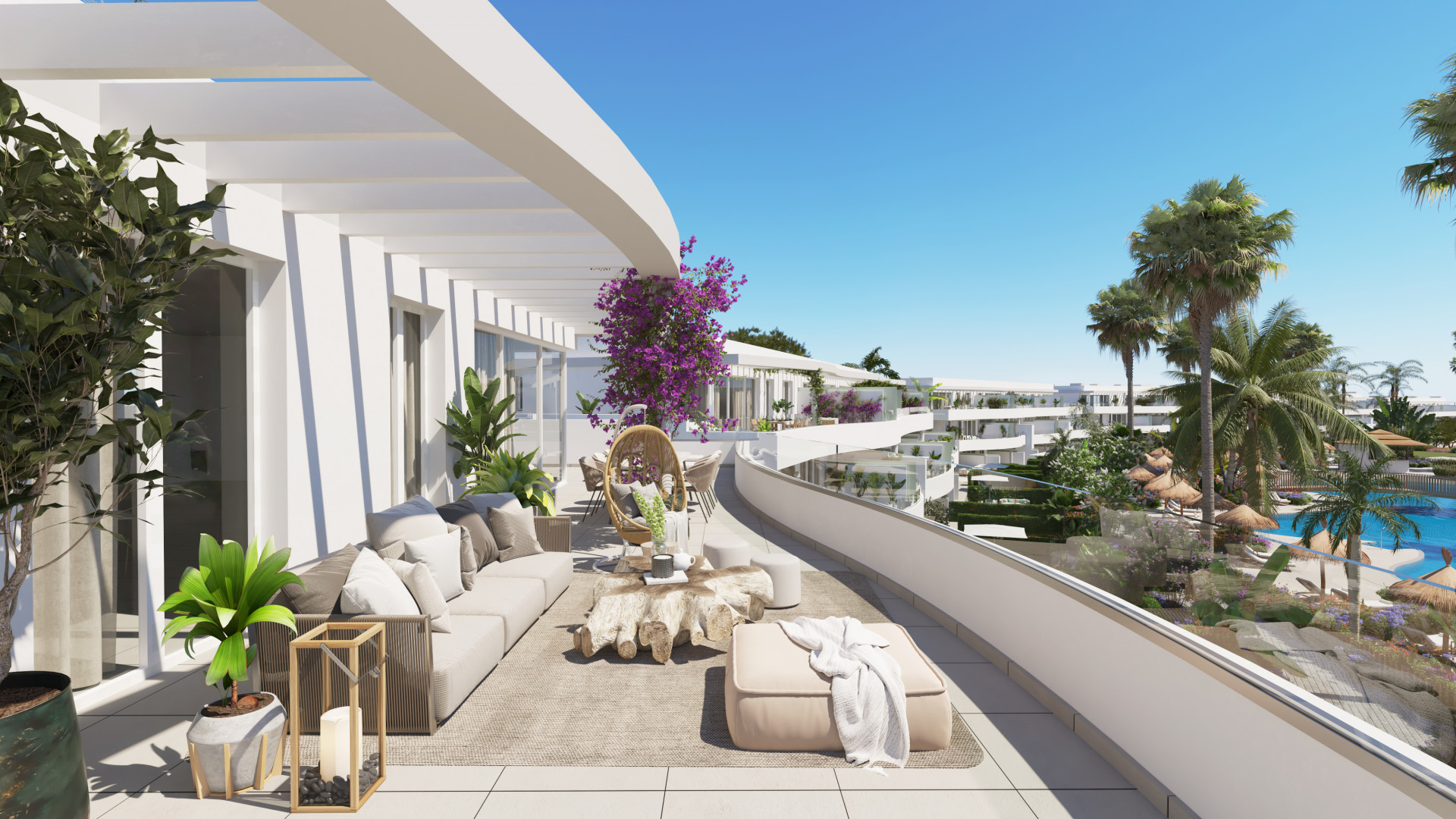
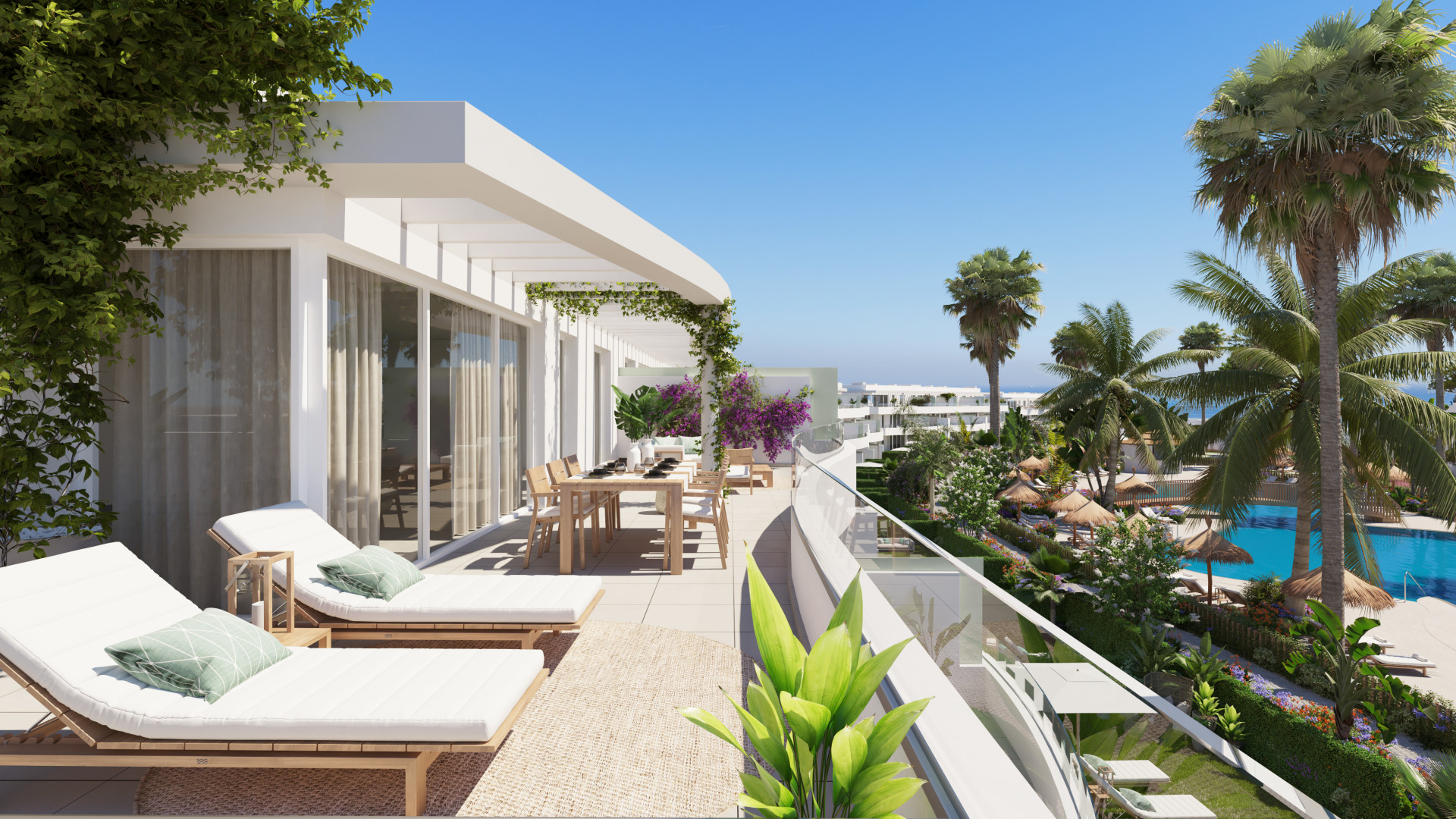
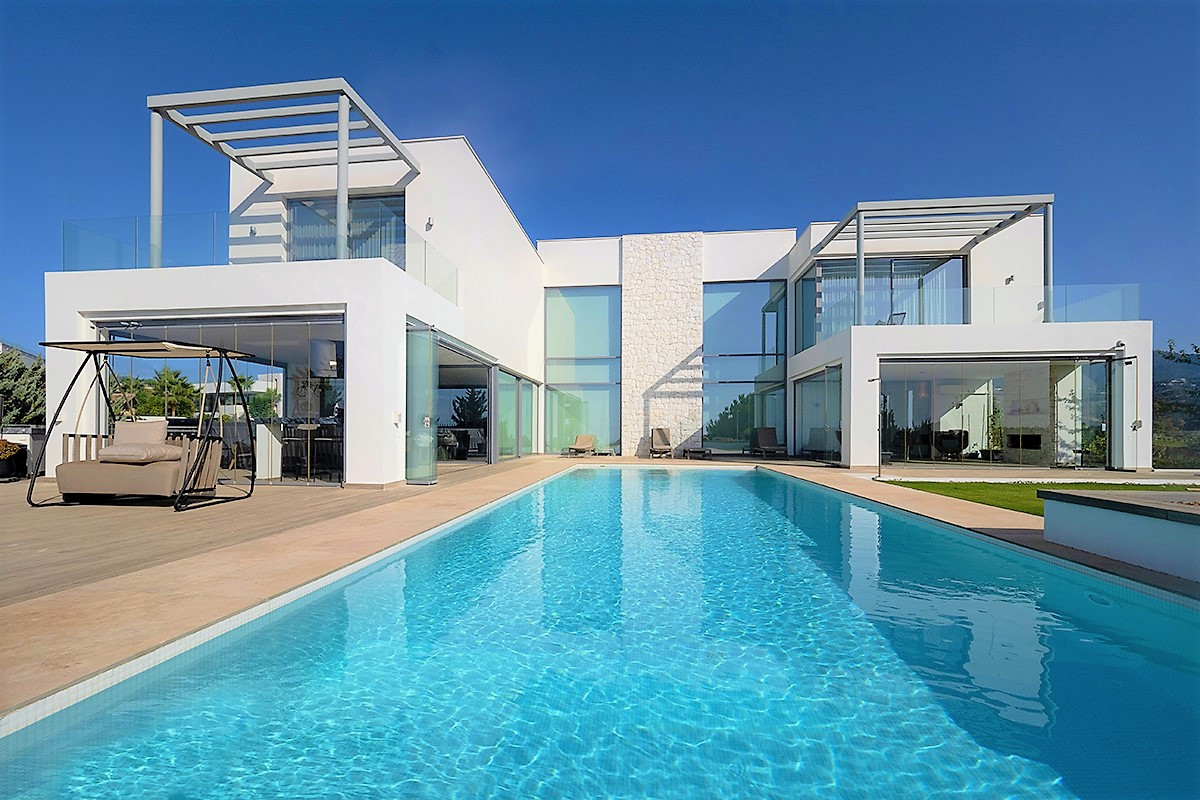
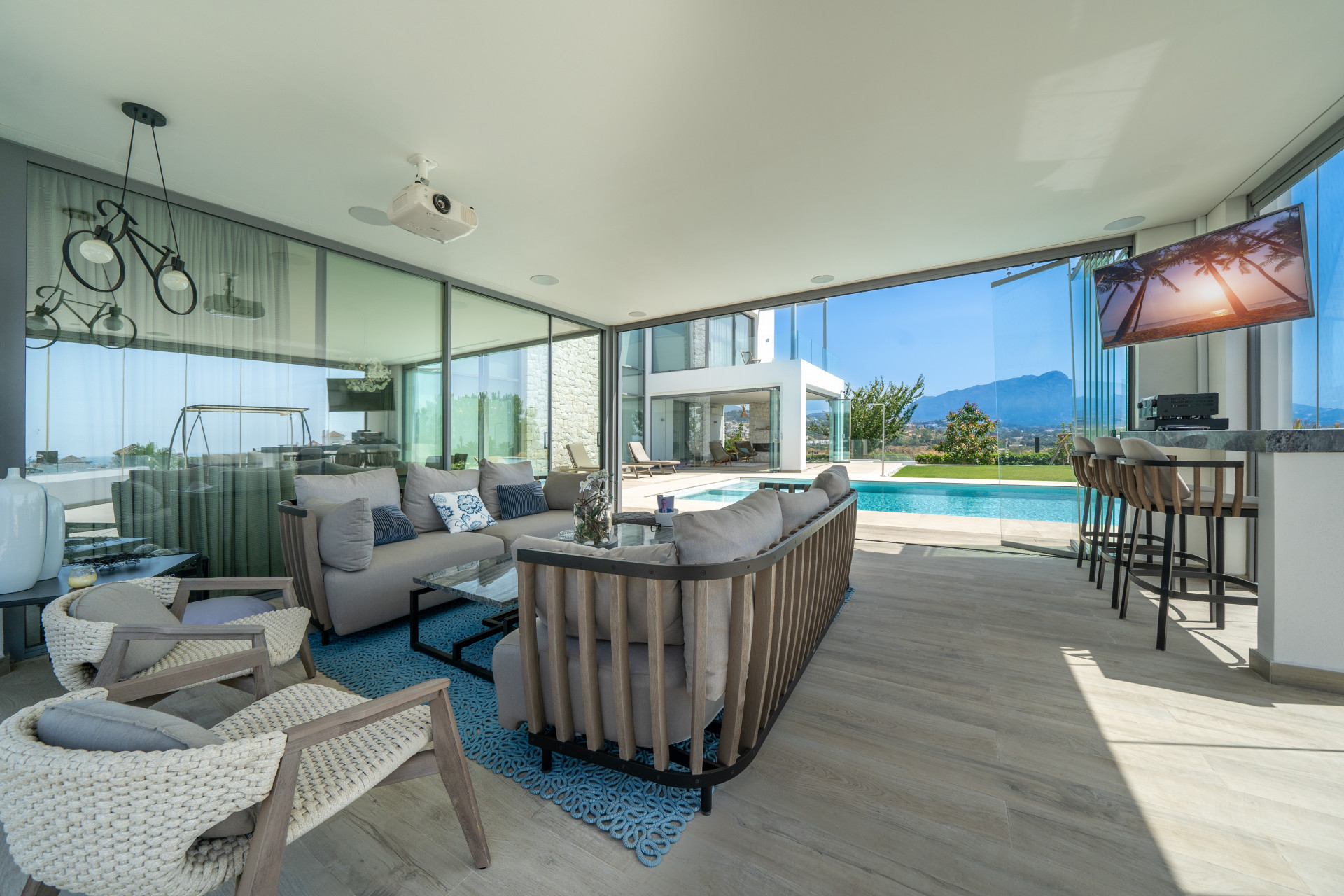
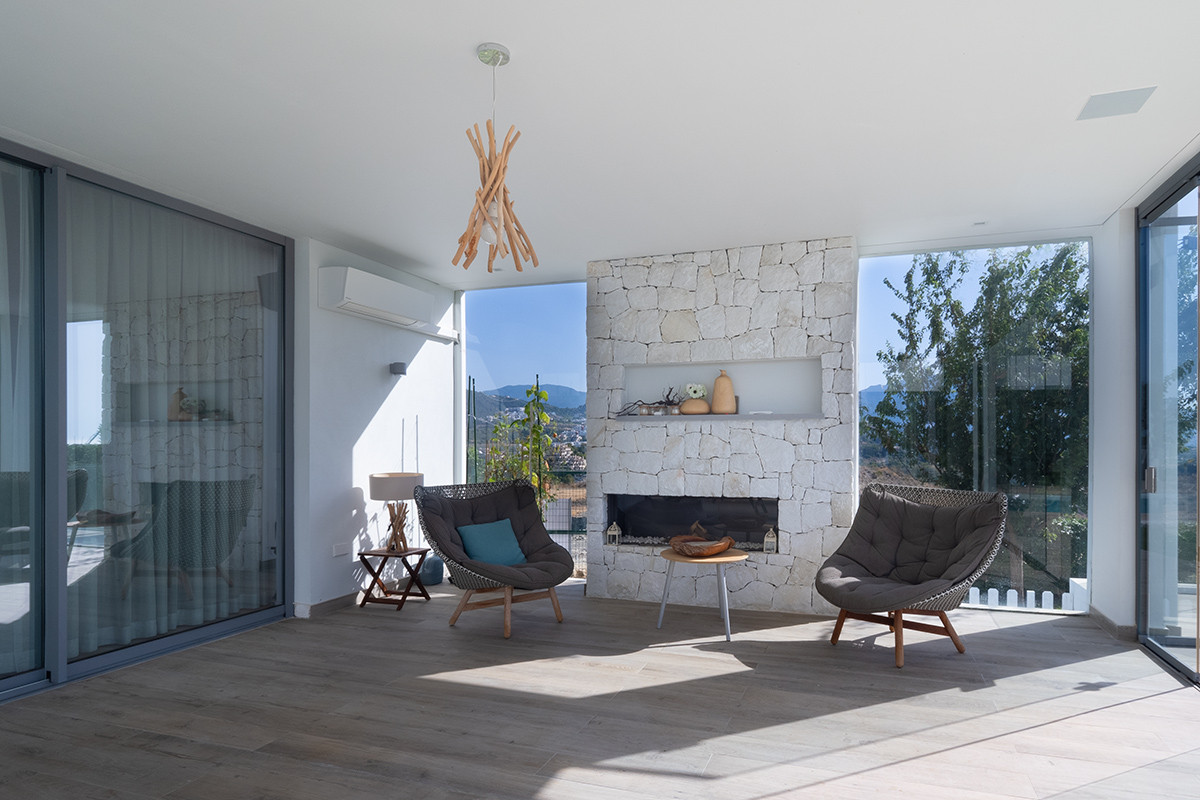
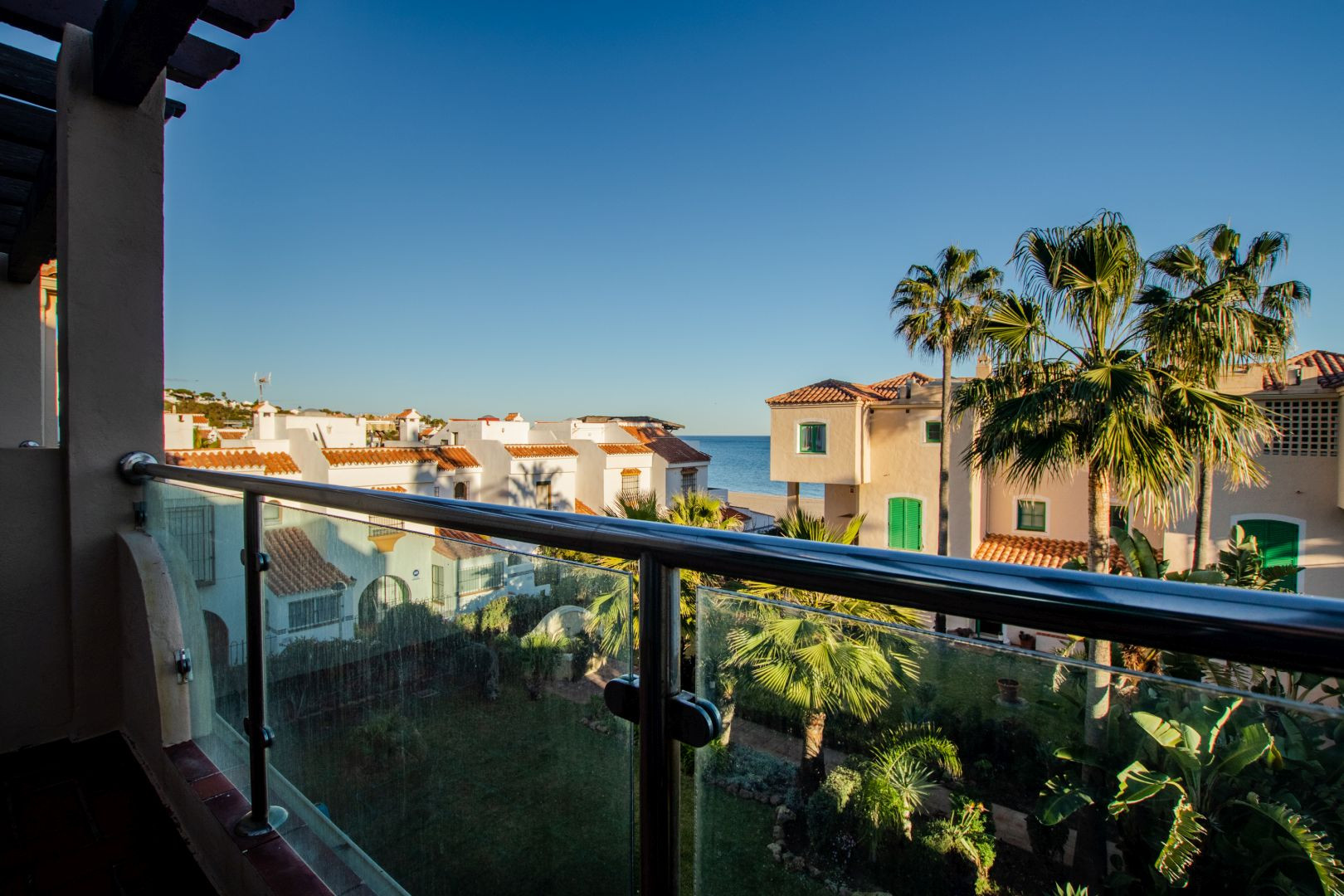
Moraira has grown incredibly over the past decades. To date, the area of urbanizations built in the vicinity is ten times larger than the area of the town itself. First of all, real estate in Moraira is presented by individual development: detached cottages, harmoniously integrated into the landscape; magnificent villas, immersed in the greenery of pine trees and bougainvillea flowers. Of course, there are also modern complexes with apartments, bungalows and townhouses.
The price per square meter of housing in Moraira in December 2022 was 3,523€. Evolution compared to December 2021 was + 11.8%, which indicates the investment attractiveness of real estate in this town. The average cost of housing, broken down by neighborhoods, is as follows:
- Casco Urbano (historic center) – 3,451 €/m2;
- Moravit-Cap Blanc – 3,789 €/m2;
- Pinar de Advocat-Cometa – 3,488 €/m2;
- Benimeit-Tabaira – 3,524 €/m2;
- El Portet-Pla del Mar – 3,758 €/m2;
- Paichi – 3,510 €/m2.
Prices for the cheapest apartments in Moraira start from 100,000 €. Bungalow can be bought at a price of 175.000 €, townhouse – starting from 195,000 €. Individual cottages are sold at a price of 340,000 €. Prices for villas are from 500,000 €, as for luxury villas – starting from 2,000,000 €.
In our catalog you will find a large selection of properties in Moraira.