A sworn translator in Spain, a traductor jurado, is a translator accredited by the Ministry of Foreign Affairs. There are no sworn translators in Russia, Ukraine or the other post-Soviet countries (except the Baltic states).
We are used to a two-step translation of documents into a foreign language involving a translator and a notary, or a translator and a consulate. The main difference of a sworn translation is precisely that it does not need any additional certification by a third party.
A translation prepared by a sworn translator and bearing their signature and stamp is used as it is, i.e. it is accepted by all public and private bodies and services throughout Spain. Neither the translator’s identity nor the accuracy of the translation needs to be certified further.
Where to find a sworn translator in Spain
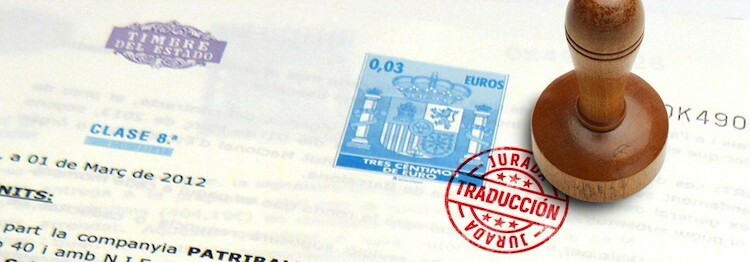
There are not many sworn translators in Spain; a list of names with their languages and contact details can be found on the website of the Spanish Ministry of Foreign Affairs.
To be accredited, you have to meet a number of requirements regarding education and citizenship, and pass an exam held at national level. This exam has not been held for several years now, so it is impossible to obtain a new accreditation. Apparently the Spanish Ministry of Foreign Affairs believes that there are enough translators today and there is no need to add more.
To order a sworn translation, you can contact a sworn translator yourself or go to a translation agency. Large estate agencies and law firms usually work with translators directly.
How a sworn translation is prepared in Spain
This is how a foreign document is prepared for use in Spain: you obtain the document you need in your home country, have an apostille put on it (if necessary) and then pass it to a sworn translator in Spain. Almost all translators work with good-quality scans of documents, so there is no need to send the original. A few days later you receive the finished translation, bound together with a printed copy of the document it was made from and bearing the sworn translator’s stamp and signature.
A sworn translator does not certify the content of the document or check its authenticity, its compliance with any standards, requirements and so on. All a traductor jurado in Spain does is translate the document and guarantee that the translation matches the original text. A sworn translator does not add anything of their own, does not supplement or change anything.
A sworn translation can be made either on plain white paper or on stamped official paper. Sworn translators in Spain use stamped paper at their discretion, i.e. it is not laid down anywhere in law as an obligation. In essence, stamped paper is only protection against forgery.
Rare languages
Sworn translators in Spain by no means work with every language. Documents issued in Kyrgyz, Armenian, Tajik and many other languages cannot be translated directly into Spanish. First, in the country where the document was issued, you will have to use the familiar “translator + notary” approach: translate the document from the national language into Russian, have the translation notarised there, add an apostille, and then have the whole resulting set translated in Spain by a sworn translator from Russian into Spanish.
Things become simpler if you can obtain the document straight away not in the state language but, for example, in English. In that case you will need a sworn translation from English into Spanish.
Where sworn translations are required in Spain
A sworn translation of foreign documents is mandatory if these documents are submitted to immigration offices, courts, banks, the Ministry of Justice, civil registries, the Ministry of Education and other Spanish bodies. In some regions the presence of a sworn interpreter is mandatory when property sales are signed before a notary.
As far as written translations are concerned, sworn translators in Spain work perfectly well remotely: they receive the order and the document scans by email and send the finished translation to the address the client gives them. So when choosing a sworn translator, you should be guided by cost rather than location. All translators quickly quote a price and a deadline for the job.
An urgent translation (24-48 hours) is usually charged at double the rate, which the translator tells you in advance. The price per page for a non-urgent translation of a standard document (for example, a birth certificate) ranges from €40 to €70. Translating legal, court and medical documents usually costs more.