Valencia, on Spain’s Mediterranean coast, is the third largest city in Spain. In recent years the capital of the Valencian Community has topped world rankings of the most comfortable cities and of cities with the highest quality of life. For a long time Valencia stood in the shadow of Barcelona and Madrid, until publications such as Forbes and The New York Times started talking about it. In 2025 Forbes magazine included Valencia in its top 5 destinations for a comfortable retirement abroad. Forbes also puts Valencia at the top of its list of the most peaceful cities. In 2024 The New York Times drew up a list of places you must visit, and Valencia was the only Spanish entry on it. Earlier still, in 2022, Forbes included Valencia in its ranking of the 50 best cities to live in, putting it in first place, and the city also came first in the ranking for the best quality of life.
Known for its rich history, vibrant culture and Mediterranean climate, Valencia is a city that offers newcomers a wealth of opportunities. Valencia is a university city where many thousands of students come to study every year. It also offers good conditions for business and start-ups, and for retirees a comfortable life by the sea. And everyone can plan an interesting cultural programme of museums, exhibitions, theatre, concerts, sports events and much more.
Quality of life in Valencia is recognised as high across a whole range of factors, from nature to infrastructure and from safety to social services. Healthcare is of a very good standard: the city has public and private clinics that are among the world leaders in various fields of medicine and carry out their own clinical research. Access to public and private education is also fairly easy for both locals and newcomers.
Pros and cons of living in Valencia
Valencia presents itself as a city that combines modernity and tradition, where you can live, study and work comfortably all year round. Its main advantages include:
- A pleasant Mediterranean climate, plenty of sunny days and the chance to play sport and enjoy outdoor activities.
- Excellent food, a huge choice of fresh seasonal produce and a wide variety of restaurants serving Mediterranean and international cuisine.
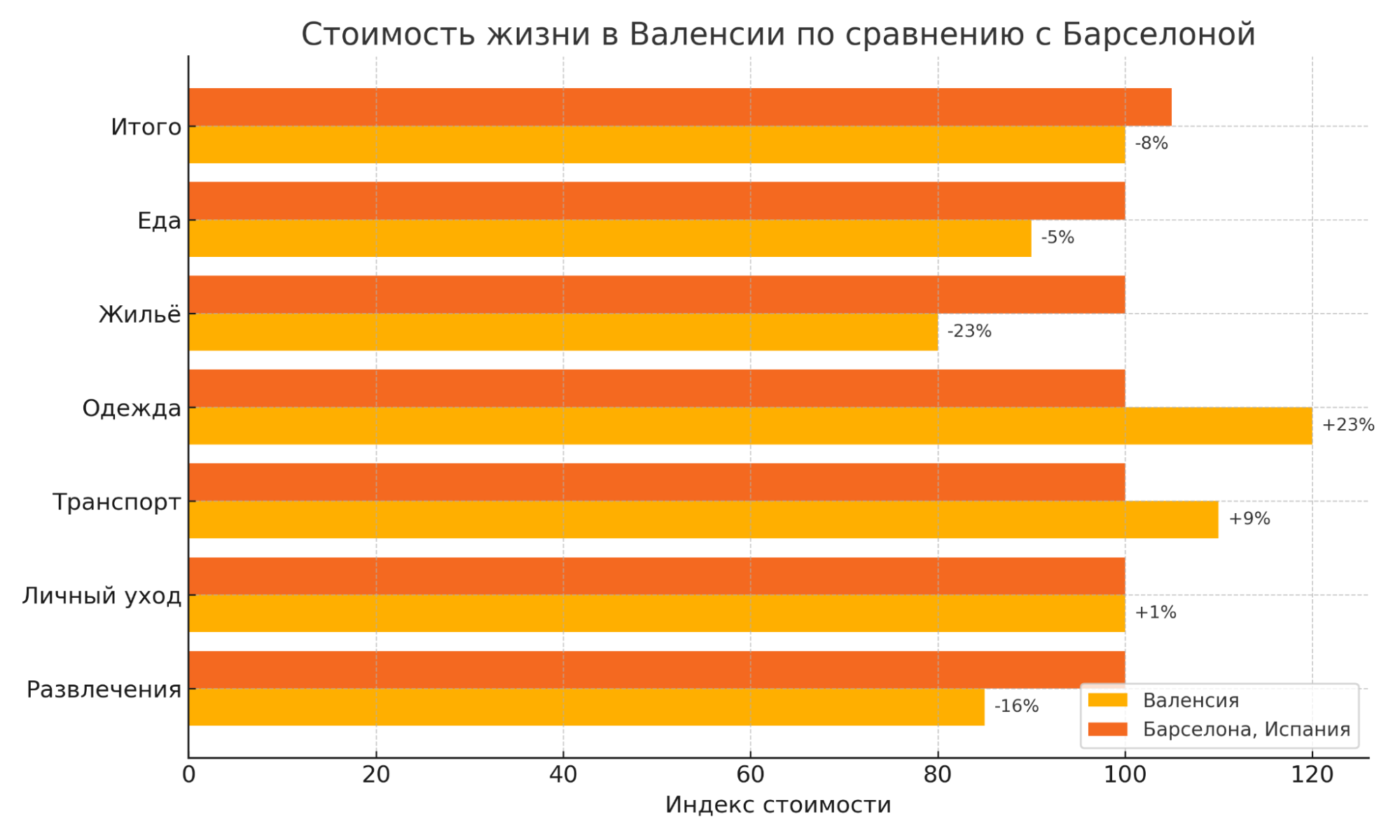
- Despite rising prices (above all for housing, both to buy and to rent), Valencia is still more affordable than Madrid and Barcelona, the cities it is usually compared with.
- A rich cultural life means nobody gets bored: you can fill your free time with concerts, exhibitions, local festivals and other community events.
- Convenient transport infrastructure includes public transport, a railway station and a large international airport.
Despite its many advantages, life in Valencia also comes with certain difficulties worth bearing in mind. The main drawbacks are:
- Rising house prices and an imbalance between supply and demand.
- Mass tourism, driven by Valencia’s growing popularity as a destination, becomes tiring in the high season.
- Heavy traffic and noise in the centre and in popular tourist areas.
Housing costs in Valencia in 2025
Over the last year rents in Spain have risen significantly, and Valencia is no exception. The average rent in the city has reached €1,500.
Nevertheless, despite rising prices, housing in Valencia is still affordable compared with Madrid and Barcelona.
Here are some accommodation options and their average prices:
- Hotels: the average price per night in a mid-range hotel is about €130.
- Furnished flats: renting a fully furnished flat costs about €1,500 a month.
- Furnished studios: the smallest flats available can be found for €500-800, depending on the area.
- Coliving (shared living): expect around €750 a month. This is a popular option with digital nomads and remote workers.
- Airbnb: renting a room or a small self-contained flat in the city centre costs about €80-120 a night, a little cheaper than a hotel.
- Student housing: a flat with several bedrooms for 4-7 people costs €250-400 per person.
- University halls: living in a hall of residence may include cleaning, half board or full board, and costs €500-900 a month.
Other costs in Valencia in 2025: food, transport, utilities
As of early summer 2025, the cost of living in Valencia was €3,631 for a family of four and €1,882 for a couple. Compared with other major cities in Western Europe, Valencia ranks 24th out of 51 for cost of living.
Food costs in Valencia differ little from other cities, as the big supermarket chains charge the same prices throughout Spain. In May 2025 the basic food basket cost €310, according to the consumer protection organisation. Of course, this amount rises considerably if you add alcohol and delicacies from local shops.
Eating out in Valencia costs as follows: breakfast €4-7, lunch €20-30 in a café or restaurant and €10-15 for fast food, dinner with alcoholic drinks €30-50 per person.
A metro ride costs €2, and a 10-trip bus pass about €9. Taxis: the minimum fare is €4 and the price per kilometre €1.25. Hiring a municipal bicycle in Valencia costs €4 a day or €29 a month.
Students arriving in Valencia on a student visa, as well as foreign nationals with a residence permit that does not allow them to work, must have full private health insurance with no co-payments. Unlike in many other European countries, health insurance in Spain is relatively cheap: on average €40 to €140 a month, depending on the insurer and the client’s age and medical history. Without insurance, a simple visit to the doctor costs €50-80.
Utility bills for two people living in an 85 m² flat come to about €130 a month, and for one person in a 45 m² flat or studio about €85 a month. A mobile phone and home internet add another €30-50 a month.
The cost of living in Valencia compared with Barcelona and Madrid, in charts: