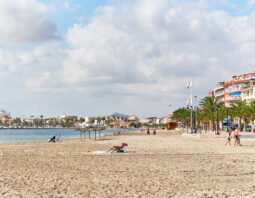
Today Spain remains, for many people, one of the most attractive countries in Europe to move to. People choose it for its mild climate, sea air, high quality of life and the hospitality of the locals. But before you decide to move, it is important to understand how much it will cost you. Below we go through all the key items of expenditure in 2025, from the visa and the move itself to everyday living costs in your new home.
Moving: paperwork and visas
The first step towards moving is choosing the right visa or residence permit. In 2025 Spain offers several options for legal entry and residence, depending on your goals and lifestyle.
If you want to live in Spain without working there, the right option is a non-lucrative residence permit (residencia no lucrativa). To get it, you need to prove a stable income from abroad: at least €2,400 a month for the main applicant and €600 for each family member. You will also need to show a sufficient amount in a bank account (usually at least €30,000-35,000), take out private health insurance and pay for the translation and legalisation of documents. The total cost of preparation starts from €3,000.
If you work remotely for foreign companies or run your own online business, the option for you is the digital nomad residence permit: the Visado para teletrabajadores de carácter internacional (or “visado de nómada digital” for short in everyday speech). It also requires proof of a monthly income of at least €2,520 and of clients (companies or individuals) outside Spain. You will also need to take out insurance and may need a lawyer to prepare the necessary documents. On average the costs are similar to those of the previous permit.
If you already have relatives in Spain, family reunification is an option. This route does not require the applicant to prove an income, but it does require proof of income and housing conditions from the family member who invites you. The main costs here are translations, the apostille and paperwork, on average €200 to €400.
So the costs at the stage of obtaining the residence permit and documents can range from €3,000 to €6,000, depending on the type of residence permit and the level of legal support.
Moving: shipping your belongings
The next stage is the actual move to Spain, including shipping your personal belongings and furniture. Costs here can vary widely depending on the distance, the volume of your belongings and the delivery method you choose.
If you are moving from an EU country, removal services for furniture and belongings can cost €1,000 to €3,000. Moving from the USA, the UK or the CIS countries is more expensive: €3,000 to €7,000. For those travelling light there is an alternative: sending your things by courier in boxes or suitcases. This costs €100 to €200 per item of luggage.
Don’t forget to budget for flights. Depending on the route, the travel class and the time of year, they can cost €50 to €500 per person.
Housing: renting or buying property
Housing is one of the biggest items of expenditure after the move. It is important to decide in advance: do you plan to rent or to buy?
Renting a one-bedroom apartment in big cities such as Madrid or Barcelona starts from €900 a month. On the Costa Blanca or the Costa del Sol you can find a home from €600. In smaller, less touristy towns rent averages from €400 a month. If you prefer to live in a house, be prepared to pay from €1,200 on the coast and from €800 inland.
If you plan to buy, the price per square metre varies by region. In the capital and Barcelona it ranges from €4,000 to €6,000. On the coast it is €2,000 to €3,500, and in rural areas you can find homes from as little as €1,000 per square metre. In Torrevieja, which is popular with Russian speakers, the current price is €2,251/m², with annual growth of +14.8%.
On top of the property price you need to add about 10-12% for taxes and notary and registration fees. In addition, if you buy through an estate agency, there is a commission, usually 2 to 5% of the price of the home.
On average, renting a home for a year will cost €5,000 to €15,000. Buying costs from €100,000 (depending on the location and size), plus the mandatory purchase costs.
Everyday living costs
After the move, everyday life begins, and it is important to understand what regular expenses to expect.
Utilities (electricity, water, gas and internet) cost €100 to €200 a month, depending on the region and the size of the home. Groceries, on a moderate and balanced diet, come to about €300-400 a month for one person and €500 to €700 for a family. That assumes you eat at home and are not a regular at restaurants.
If you use public transport, a monthly pass costs €30 to €50. Owning a car means extra costs: petrol in 2025 costs about €1.50 a litre, insurance €300 to €700 a year, and annual servicing about €500 on average.
Private health insurance costs €40 to €100 a month per person. Public healthcare is available to residents and to children regardless of their status in Spain, and is usually accessed through the healthcare system with a SIP number.
If you have children, you need to factor in the cost of education. State schools are free, but private schools can cost €300 to €1,000 a month depending on the city and the standing of the school.
An approximate annual budget
Let’s sum up and put together an approximate budget for a year of living in Spain in 2025.
For one person, a minimum comfortable standard of living will cost €14,000 to €20,000 a year. This covers rent, food, utilities, insurance, transport and day-to-day expenses.
For a family of three, the figure rises to €22,000-35,000 a year. It varies depending on the region, your lifestyle and the home you rent.
The cost of living in the capital and on the coast
For comparison, let’s take the cost of living in prestigious Madrid and in popular, multicultural Torrevieja in 2025, based on data from Numbeo:
The overall cost of living in Torrevieja (excluding rent) is about 22.5% lower than in Madrid.
- Including rent, living in Torrevieja is 33.3% cheaper.
- Renting a home in Torrevieja is 54.5% cheaper than in the capital.
- Restaurant prices in Torrevieja are 17.5% lower.
- Groceries in Torrevieja’s shops are 16.8% cheaper.
- Residents of Torrevieja have 27.5% more purchasing power, despite lower salaries.
Renting
1-bedroom apartment in the centre:
- Madrid: €1,400
- Torrevieja: €567
3-bedroom apartment outside the centre:
- Madrid: €1,634
- Torrevieja: €812
Buying property
1 m² in the city centre:
- Madrid: €7,007
- Torrevieja: €1,750
1 m² outside the centre:
- Madrid: €4,232
- Torrevieja: €1,233
Salaries
The average net salary in Madrid is €2,130, while in Torrevieja it is €1,812. Despite the difference, residents of Torrevieja come out ahead in purchasing power thanks to lower living costs.
The conclusion is this: if your work is not tied to the capital, or you dream of a quiet resort life by the sea, Torrevieja is an excellent choice. The cost of living here is noticeably lower, while the quality of life is excellent: sea, sun, peace and quiet, and affordable property.
Conclusion: is the move worth it?
Despite the noticeable upfront costs, life in Spain remains one of the most affordable in Western Europe. Settling in a small coastal town is especially worthwhile: the climate is warm, housing is affordable, there is less stress and the quality of life is higher.
If you dream of life by the sea, with walks through old streets, fresh fruit for breakfast and a relaxed pace of life, Spain may be exactly the place where your new happiness begins.
Getting ready to move or looking for the perfect home in Spain? Alegria Premium will help you at every stage, from choosing a region and signing a rental or purchase contract to settling successfully into your new country.