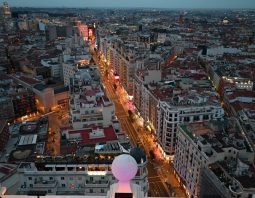
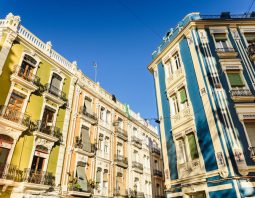
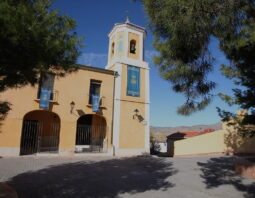
Málaga is a popular resort city on the Costa del Sol, the capital of the province of the same name, the second largest city in Andalusia and the sixth largest in Spain. Málaga has one of Spain’s largest ports. According to 2022 figures, almost 580,000 people lived in the city itself and just over 1.7 million in the province. The city stretches along the shore of a large bay next to the Montes de Málaga Natural Park, whose mountain peaks give good protection from northerly winds.
The city and province of Málaga lie in the most densely populated part of Spain’s Mediterranean coast. But unlike neighbouring regions, the share of foreign residents here is small: according to statistics, foreigners make up about 13.5% of the population, most of them from Morocco, Argentina and Paraguay.
Distances from the centre of Málaga to the nearest points of interest:
- Málaga International Airport: 10 km;
- Benalmádena: 23 km;
- Fuengirola: 32 km;
- Nerja: 56 km;
- Marbella: 60 km;
- Puerto Banús: 66 km;
- Estepona: 90 km;
- Ronda: 101 km;
- Granada: 132 km;
- Gibraltar: 136 km.
History of Málaga
Málaga is a city with an extremely rich history going back many centuries, one of the oldest cities not only in Spain but in Europe. The whole of Spain’s Mediterranean coast was settled by ancient tribes as early as the Late Palaeolithic. But Málaga’s real history began with the arrival of the Phoenicians on the coast in the 8th century BC. Over thirteen centuries Málaga passed from hand to hand and changed rulers, while growing, developing and getting stronger. The Phoenicians were succeeded by the ancient Romans, under whom Málaga became a major trading centre exporting pottery, raisins, olive oil, wines and the famous Roman fish sauce, garum. At the end of the 1st century AD Málaga was given a special status and its residents were granted the rights of Roman citizens.
At the start of the 5th century the Visigoths came to Málaga. A century and a half later the city passed to the Byzantines, then, another century later, returned to the Visigoths, and was then conquered by the Arabs.
The period of Muslim rule saw the city’s architectural flowering: mosques were built, as well as the Alcazaba fortress and the Atarazanas building (today the municipal market), which served as both a prison and a military hospital, was badly damaged and was almost completely rebuilt at the end of the 19th century. The city’s economic power grew stronger, and Málaga remained the largest trading centre in the Mediterranean.
Liberation from Muslim rule came in August 1487: Castilian troops took the city back, joining Málaga to the Crown of Castile. Mosques were hastily taken over and converted into Christian churches, Catholic monasteries were built, and Christians from neighbouring lands flocked to the city and its surroundings. This is how Málaga Cathedral rose on the site of one of the city’s mosques.
The new Christian era in Málaga’s history can hardly be called peaceful and quiet. Over the centuries the city was shaken by riots and uprisings and struck by epidemics, and the civil war did not pass it by either. At the same time industry developed rapidly in the city: textile mills and steelworks opened, and agriculture continued to develop.
The modern era of Málaga’s history began in the 1960s with the start of the tourist boom. Europeans discovered the resorts of the Costa del Sol, and an endless stream of tourists headed for Málaga. Today Málaga is a city of art and museums, a city of modern technology and the cultural capital of the region. Málaga is the birthplace of Pablo Picasso, and two museums have opened in the city in memory of the great artist: the Museo Picasso art museum and the Museo Casa Natal Picasso, the house where he was born. Málaga is also an important transport hub for south-eastern Spain.
Weather and climate in Málaga
Málaga’s hot, dry climate is typical of this part of Spain’s Mediterranean coast. Moderately cool winters give way to a warm spring, which turns into a hot summer. Autumn is one of the most pleasant times of year in Málaga: the heat has eased and the mild late season has begun, lasting until the end of October.
Málaga has little rainfall, and it falls seasonally. In between, dry and sunny weather can last for weeks. Unlike on the Costa Cálida and the Costa Blanca, the sea does not get very warm: the average water temperature in summer is 23.5°C.
Transport in Málaga
As we mentioned above, the port of Málaga is one of the largest in the country. As for passenger transport, regular ferries run from the port of Málaga to Melilla, one of Spain’s enclaves on the African coast.
In the city centre there is a large railway station that also serves AVE high-speed trains. The journey to Madrid on one of these trains takes only about 2.5 hours. Regional and commuter trains connect Málaga with the neighbouring resort towns of Fuengirola, Torremolinos and Benalmádena.
But Málaga’s main transport hub is of course its international airport, just 8 km from the city. The airport serves the whole south of the country; in 2022 its passenger numbers came close to 20 million (fourth in the country after the airports of Madrid, Barcelona and Palma de Mallorca). The airport handles domestic Spanish flights as well as European and international flights.
Public transport in the city and the surrounding area includes a light metro, city buses, intercity buses and commuter trains. Even without a car of your own, it is easy to get around the province of Málaga.
Beaches of Málaga
Málaga’s 14 km coastline is a series of beaches and small coves. Let’s take a walk along all of them, starting with the easternmost and moving south-west along the coast.
Playa de la Araña
A sandy beach 400 m long and 25 m wide. It sits right next to a fishermen’s quarter, so you will often see boats pulled up on the sand. Near the beach there is an archaeological park, one of the most important in Andalusia. In recent years Playa de la Araña has become increasingly popular because dogs are allowed to relax and swim here. That is exactly what makes it attractive: its distance from the centre, its seclusion and its freedom.
Playa Peñón del Cuervo
A sandy beach 450 m long and 25 m wide, divided in the middle by a rocky outcrop rising above the water. It is a great place for snorkelling. There is a car park near the beach, lifeguards are on duty in high season, and there is sunlounger and parasol hire. For those who like to spend long, active days outdoors there is also a barbecue area. Concerts are often held at Playa Peñón del Cuervo in summer.
Playa El Candado
A small sandy beach 125 m long and 30 m wide, next to the port. It is very busy all year round. Nearby is one of Málaga’s most popular restaurants, El Candado Beach.
Playa El Dedo
A sandy beach 550 m long and 25 m wide. It is very popular with locals and tourists. It runs alongside the promenade, lined with many bars and restaurants, including the famous El Tintero. The beach is ideal for families who want to combine sun and sea with a family lunch.
Playa el Palo
A sandy beach 1.2 km long and 25 m wide, one of the most popular in the city. It regularly receives top quality ratings as one of the most convenient, accessible and safe beaches in Spain. Nearby there are car parks, public transport stops and a large choice of bars, cafés and restaurants. Lifeguards are on duty on the beach, and there are sports areas and children’s playgrounds. In summer Playa el Palo has an open-air night cinema.
Playa Pedregalejo – Las Acacias
A sandy beach 1.2 km long and 20 m wide in the oldest and most popular part of the city. It has a gentle, easy entry into the sea and is protected from strong waves by breakwaters; it is much loved by locals and especially by families with children. People come here not only to sunbathe and swim but also to sit in one of the many fish restaurants along the promenade. There is a car park near the beach.
Playa los Baños del Carmen
A sandy beach 500 m long and 15 m wide, one of the oldest city beaches. As early as the beginning of the 20th century Playa los Baños del Carmen was a favourite spot of the city’s bourgeoisie. Today it is chosen by families with children and young people, and the beach has everything you need for a comfortable time. There are car parks and public transport stops nearby. In summer lifeguards are on duty and there is sunlounger and parasol hire.
Playa la Caleta
A sandy beach 1,000 m long and 25 m wide, close to the city’s historic centre. An excellent city beach that receives top quality ratings every year for its first-class facilities. There are hardly ever strong waves here, so you can relax comfortably with children. There are lifeguards, parasol and sunlounger hire as well as pedal boat hire, children’s playgrounds, sports areas and much more.
Playa La Malagueta
A sandy beach 1,200 m long and 45 m wide, the best known and most popular in the city. It is in the Malagueta district near the five-star Gran Hotel Miramar and not far from other city sights, and it is busy at any time of year. It is a very well-equipped beach with all the necessary facilities. Every year it receives a Blue Flag, the highest European award for cleanliness and quality. It is popular with tourists, but locals often choose it too: the beach is easy to reach, it is accessible for wheelchairs, and there are playgrounds for children. It is famous, first, for its golden sand brought from the Sahara in Africa; second, for its mini-tsunamis, a series of waves raised by the high-speed ferry coming into port; and third, for its fish restaurants that cook over open coals in specially fitted boats.
Playa San Andrés
A sandy beach 600 m long, the busiest and noisiest of the city beaches. It is near Málaga railway station. It is very well equipped and suitable for families with children. Nearby there are many excellent restaurants and bars where you can have a proper lunch or simply enjoy a cocktail or a glass of wine.
Playa La Misericordia
A sandy beach 2 km long and 30 m wide, the largest in the city. Old industrial kilns and chimneys, a legacy of the industrial 19th century, still stand near the beach. Close to the beach lies the lovely Parque del Oeste, and the Automobile Museum is nearby. Playa La Misericordia is very well equipped, has a convenient gently sloping entry into the sea and is suitable for families with children. There is a large choice of bars, cafés and restaurants nearby. Lifeguards are on duty on the beach, and there is entertainment for adults and children: sports areas, children’s play zones, inflatable platforms for jumping into the water and so on.
Playa Sacaba
A sandy beach 750 m long and 60 m wide, near the mouth of the Guadalhorce river, one of the quietest in the city. It is in Málaga’s old industrial district and is never very crowded.
Playa Guadalmar
A sandy beach 450 m long and 30 m wide, west of the mouth of the Guadalhorce river. It is the city’s only nudist beach. It is not very crowded but, unfortunately, quite noisy, as Málaga Airport is next door.
Playa Campo de Golf San Julián
A sandy beach 2 km long and 50 m wide, the farthest from the centre and also the largest. It is a favourite place for kitesurfers to relax and practise their sport. It is close to the golf club and its courses and has barbecue areas.
Sights of Málaga
First and foremost, Málaga is a city of museums. You will need more than one day to visit them all. The largest and most popular include: the Picasso Museum, with a permanent exhibition of the artist’s work; the Picasso Birthplace Museum, where the artist spent his childhood; the Museum of Málaga, a museum of local history; the Carmen Thyssen Museum, which shows works by well-known Spanish masters from the mid-19th to the early 20th century; the Russian Museum; the Automobile Museum with a very interesting collection of vintage cars; the Jorge Rando Museum, the Interactive Music Museum with an interesting display of musical instruments, and the Contemporary Art Centre.
Among Málaga’s architectural sights, the ruins of the Roman Theatre, dated by archaeologists to the 1st century AD, are worth a mention, and of course the legacy of the Muslim era: the Alcazaba fortress, built in the 11th century on the foundations of a Roman fortress, and the Gibralfaro castle, which once served as a lighthouse and is linked to the Alcazaba by a walkway, forming a single complex with it. Both fortresses are well preserved and clearly show the power and grandeur of the Taifa of Málaga, the medieval Muslim state whose era saw the flowering of Arab military and religious architecture. In the Alcazaba you can visit the Archaeological Museum. On a clear day the fortress walls offer panoramic views of Málaga, the coast and the sea as far as Gibraltar. As for the Roman Theatre, little has survived to the present day: the stage, part of the seating and some galleries. Today concerts and performances are often held on this stage.
Among more modern buildings, the city hall deserves special attention: it was built in the early 20th century in the neo-Baroque style and was added to the Register of Cultural Heritage in 2010. Next to the city hall lies the beautiful Parque de Málaga, which covers a huge area of 10 hectares and is recognised as one of the largest and most beautiful city parks in Europe.
Shady avenues, many benches, a variety of sculptures and fountains, a rich collection of Mediterranean and exotic plants and children’s playgrounds give the park a special charm and make it a favourite place for residents to relax. The eastern end of the park finishes at Plaza del General Torrijos, with the Fountain of the Three Graces in its centre. Nearby you can also see a bust of Rubén Darío. Here too, a few steps from the square, is La Malagueta, the bullring and one of the most visited places in Málaga. The bullring was built in the 19th century, and today it houses the Antonio Ordóñez museum, named after the famous bullfighter. The museum is devoted to the art of bullfighting, closely intertwined with the history of Spain.
The centre of religious life in Málaga is the majestic Cathedral of the Incarnation, one of the city’s landmarks. Its construction began in the 16th century on the site of an Arab mosque, lasted more than two centuries and ended in 1782. The cathedral was never fully completed: only one of its two towers was built, which gave it a second, popular name, “La Manquita”, “the one-armed lady”. A small orange garden has been laid out in the cathedral courtyard, and there is a museum inside the cathedral itself.
Districts of Málaga
Administratively, Málaga is divided into 11 large districts and many smaller neighbourhoods. The city’s administrative districts are: Centro, Este, Ciudad Jardín, Bailén-Miraflores, Palma-Palmilla, Cruz de Humilladero, Teatinos-Universidad, Carretera de Cádiz, Churriana, Campanillas and Puerto de la Torre. They all differ in size, distance from the historic centre, prestige, type of buildings, infrastructure, property prices and so on.
When choosing a place for a holiday or to live permanently, look at the neighbourhoods. As in any big city, they can be cheap or expensive, safe or troubled, with good infrastructure or less well served.
Here is a short list of the most convenient and safest areas of Málaga:
La Malagueta, Málaga
A popular area next to the beach of the same name and close to Málaga’s historic centre. The Muelle Uno pier promenade offers a beautiful view of the port and is also the tourist and shopping heart of the city.
Centro, Málaga
The central district, with beautiful architecture and superbly preserved historic buildings thanks to a special plan to preserve Málaga’s historic heritage carried out in the 1990s. The Soho quarter within the central district acts as the city’s arts centre: this is where you find the Contemporary Art Centre, several major museums, the cathedral and the city’s two fortresses. The central district is also crossed by Málaga’s best-known and most expensive street (and the fifth most expensive street in Spain), Calle Marqués de Larios, lined with dozens of expensive shops and designer boutiques.
La Trinidad, Málaga
One of the most authentic districts of the city, steeped in history and the spirit of old Málaga.
Carretera de Cádiz, Málaga
A prestigious district with excellent infrastructure, close to the sea and the beach, yet not as noisy and full of tourists as the central district.
Teatinos, Málaga
A university district of new buildings with a convenient layout and many parks and sports centres. One of the most modern areas of Málaga, popular with students and young families.
El Limonar and La Caleta, Málaga
Districts slightly away from the busy centre, the most fashionable and expensive in Málaga. Upmarket buildings, 19th-century houses and mansions, modern premium developments, lots of greenery and excellent infrastructure make these the most convenient and sought-after areas.
Misericordia, Málaga
A residential area next to the beach of the same name. It is known for its convenience, comfort and lack of heavy traffic.
Pedregalejo, Málaga
An area away from the centre with a convenient layout and good infrastructure, which grew up on the site of old fishermen’s quarters. Today it is an oasis of peace and quiet right by the sea, an excellent option for living permanently.
Pinares de San Antón and Lomas de San Antón, Málaga
Two areas in the highest part of the city, known for their stunning views of the Mediterranean. Residents love them for their quiet and comfort.
Inexpensive but quite safe areas of Málaga include Cruz Humilladero, Huelin, Nueva Málaga and Ciudad Jardín. Property here is mostly older housing stock, so you can find good, interesting homes at affordable prices.
The troubled areas are La Palma-Palmilla, Los Asperones and Cruz Verde. If you look through Málaga’s crime reports, these are the areas mentioned most often.
Property in Málaga
Property in Málaga is in high demand. Unlike many neighbouring resorts, the city does not empty out in winter: life here is always in full swing, and most of the population lives here all year round rather than coming only on holiday. So Málaga, its way of life and rhythm, and its tourist flow are little affected by seasonal swings. This also shows in the property market: the city has always had consistently high demand not only for holiday property but also for homes suited to permanent family living.
As in any big city, Málaga’s property market has absolutely everything, from small studios to luxury villas. In terms of property prices, Málaga is one of Spain’s expensive cities. While in May 2023 a square metre of housing cost €1,976 across the country as a whole, in the province of Málaga it was €2,918 and in the city of Málaga itself €2,440.
The most expensive properties in Málaga are in the historic centre and the surrounding districts, as well as in the hillside areas famous for their panoramic views of the city and the sea. Prices by district are as follows:
- Centro: €3,874/m²;
- Este: €3,671/m²;
- Ciudad Jardín: €1,871/m²;
- Bailén-Miraflores: €2,209/m²;
- Palma-Palmilla: €2,012/m²;
- Cruz de Humilladero: €2,330/m²;
- Teatinos-Universidad: €2,956/m²;
- Carretera de Cádiz: €3,384/m²;
- Churriana: €2,313/m²;
- Campanillas: €1,808/m²;
- Puerto de la Torre: €2,268/m².
Prices for studios in Málaga start from €68,000, for small apartments or bungalows with 1-2 bedrooms from €85,000, and for more spacious apartments with 3 or 4 bedrooms from €92,000. Townhouses that do not need major renovation sell from €130,000, detached houses from €190,000, villas from €600,000 and luxury villas from €2,000,000.