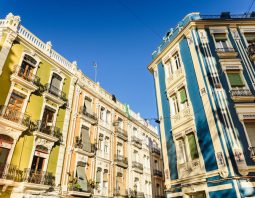
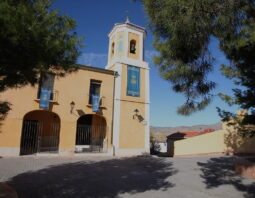
Águilas is a resort town on the Costa Cálida (Region of Murcia). It stretches along the shore of the Gulf of Mazarrón, 105 km from the regional capital, the city of Murcia. Its coastline is 28 km long and takes in rocky stretches, small secluded coves and sandy beaches. Águilas is not exactly a household name among Russian-speaking holidaymakers. Even so, it is a very popular resort with Europeans: the people who holiday and buy property here are mainly from the UK, Germany and Scandinavia.
The Costa Cálida is not as well promoted as the Costa del Sol and the Costa Blanca, which only adds to its appeal. It is very quiet and safe here, with no heavy traffic and no huge tourist crowds. At the same time, almost every municipality on this coast, Águilas included, has long (sometimes several kilometres long) seafront promenades and very clean, superbly equipped beaches. Add to this the many nature parks and protected areas, the absence of overly dense development, quite reasonable property prices and a long beach season, and it immediately becomes clear why discerning Europeans choose to holiday or retire right here.
Águilas: general information and climate
According to 2024 figures, Águilas has a population of just over 37,000, of whom around 16% are foreigners. Most foreign residents come from Morocco and Latin America and, as mentioned above, from Germany, the UK, Romania, France, Bulgaria and Italy. The municipality covers an area of around 252 km². By population density, Águilas ranks 19th out of 54 in the region.
The average annual temperature is 18°C and the average sea temperature is 20°C (in high season it can rise above 25°C). Águilas is the southernmost municipality in the Region of Murcia, on the border with Almería. The warm Mediterranean climate makes for comfortable living all year round. The hottest months are July and August, the coolest are December and January. This part of Spain gets little rainfall: when it does rain, it is seasonal and lasts only a handful of days. The swimming season runs from May to October, and you can sunbathe all year round, winter months included.
Águilas is surrounded by low mountain ranges: the Sierra de la Carrasquilla, the Sierra de la Almenara and Lomo de Bas. The most prominent peak, El Talayón, rises 881 m above sea level. Near Águilas lie the Cabo Cope-Calnegre Regional Park (Parque Regional de Cabo Cope-Calnegre) and the Cuatro Calas protected landscape (Paisaje Natural de Cuatro Calas). Inhabited since the Palaeolithic, the town and its surroundings bear traces of many ancient cultures: El Argar, Phoenician, Roman and Moorish. Finds from Roman times, dating from the 1st to 4th centuries, stand out in particular, and the Roman baths hold an important place among them.
The local economy is based on farming, tourism and construction. Farms take up a large part of the municipality: Águilas grows fruit (melons and watermelons, nectarines and citrus) as well as greenhouse vegetables. Off the coast there are fish farms raising sea bass and gilthead bream. The hotel trade, tourism, services and catering are also growing year on year.
Águilas: how to get there
The nearest airports to Águilas:
- Region of Murcia International Airport (Corvera): 80 km
- Alicante-Elche International Airport: 188.9 km
- Almería International Airport: 119.4 km
A bus runs from Murcia airport to Murcia bus station. From the bus station you need to get to the railway station (a taxi is the easiest option) and change there to a local train to Águilas. From Almería airport you can reach Águilas by bus. From Alicante airport you can take a bus with a change in Cartagena or, after getting to Alicante railway station, a train with a change in Murcia.
There are direct bus services between Águilas and the following towns: Murcia, Madrid, Lorca, Almería, Mazarrón, Vera, Cuevas del Almanzora and Cartagena. Águilas is linked to Murcia by line C-2 of the regional commuter trains, which runs via Lorca, Pulpí, Almendricos and Puerto Lumbreras.
Distances from Águilas to the nearest major towns:
- Lorca: 37 km
- Puerto de Mazarrón: 40 km
- Mojácar: 48 km
- Cartagena: 80 km
- Murcia: 103 km
- Almería: 127 km
- Granada: 250 km
Port life in Águilas
The town of Águilas (Murcia) has three ports, each with its own role:
- Águilas fishing and leisure port (Puerto Pesquero-Deportivo de Águilas). This port lies in the bay between Punta Negra and Punta de la Aguilica. Its fishing section is busy with local fishermen and is home to one of the largest fishing fleets in the Region of Murcia. The port also has a fish auction.
- Águilas Yacht Club marina (Puerto Deportivo del Club Náutico de Águilas). Founded in 1982, it has 158 berths for boats from 6 to 12 m long. It is also home to sailing and diving schools, and there is a restaurant and a café on site.
- Juan Montiel marina (Puerto Deportivo Juan Montiel). This modern marina, set in an attractive stretch of coast close to popular beaches and tourist facilities, can take vessels up to 30 m long. It offers diving, sailing and other water sports all year round.
Águilas: past and present
The first known settlements on the site of present-day Águilas date from the Roman period. The ancient settlement was called Aquilae and served as an important transport hub for exporting the minerals extracted from local mines. Numerous archaeological finds, including Roman baths, point to a well-developed urban infrastructure at the time.
After the fall of the Roman Empire, Águilas went through a series of conquests. It was first under Visigothic rule, then part of the Byzantine Empire, and was later conquered by the Muslims. The first geographical mention in written sources dates from the 11th century. In the early and high Middle Ages the town was known as Áqila and was a port guarded by a defensive fortress. In the 13th century, after the Treaty of Alcaraz was signed in 1243, the territory of Murcia, including Águilas, passed to the Crown of Castile.
The town began to take on its modern appearance in the 18th century. In 1765, by order of King Charles III, the engineer Mateo Vodopich drew up a town plan that provided for the expansion of residential districts. At the same time the castle-fortress of San Juan de las Águilas was built to protect the bay and the coast from pirate raids. Until 1834 Águilas was administratively subordinate to Lorca, after which it became an independent municipality.
In the 19th century Águilas enjoyed an economic boom thanks to the growth of mining and an influx of foreign investment. A railway line was built between Lorca, Baza and Águilas. It carried the minerals extracted from local mines to the port, as well as esparto grass, which was used to make paper and textiles. In this period the El Hornillo pier was built, where cargo ships moored.
The early 20th century brought a crisis in mining. People lost their jobs, and families left the places where they had settled and moved to other parts of Spain in search of a better life. By the mid-20th century the economy began to recover: tourism and agriculture received a sharp boost. Today the town’s economy relies mainly on summer tourism and on farming, growing fruit (oranges, lemons, nectarines, melons and watermelons) and vegetables (tomatoes, lettuce, aubergines, courgettes and celery). The town has businesses that sort, store and distribute produce. Other important sectors of the local economy include construction, fishing, railway workshops, aquaculture, the hotel trade and retail.
Finally, one of the best-known local attractions deserves a mention: the Águilas Carnival. It draws large numbers of visitors every year and has been declared a Festival of International Tourist Interest.
Sights of Águilas
The main sights in and around Águilas include:
- San Juan de las Águilas Castle (Castillo de San Juan de las Águilas): a 16th-century fortification built to protect against raids by Barbary pirates. The castle stands on a hilltop and offers panoramic views of the sea and the town.
- Águilas Municipal Archaeological Museum (Museo Arqueológico Municipal de Águilas): the collection includes archaeological finds from this part of the coast, such as Roman coins, pottery, mosaics and other artefacts.
- El Hornillo pier (Embarcadero del Hornillo): a monument to the industrial era, surrounded by picturesque scenery.
- Sea Interpretation Centre (Centro de Interpretación del Mar): a visitor centre whose exhibition is devoted to the history of seafaring and fishing and to the maritime culture of Águilas.
- Roman baths of Águilas (Termas Romanas de Águilas): the remains of ancient Roman baths from the 1st to 4th centuries AD.
- Esparto Museum (Museo y Centro de Difusión del Esparto): a museum about the traditional craft of working esparto, a Spanish grass, and its importance to the regional economy.
- Church of St Joseph (Iglesia de San José): the town’s main parish church, built in the 19th century, with an altar adorned with an image of Our Lady of Sorrows (Virgen de los Dolores).
- Town hall façade (Fachada Casa Consistorial): an elegant 19th-century building with fine architectural detailing, on the Plaza de España.
- Railway Museum (Museo del Ferrocarril): a museum dedicated to the history of rail transport, with old photographs, models and tools on display.
- Águilas Football Museum (Museo del Fútbol Aguileño): an exhibition on the history of the local football club Águilas CF and the town’s football traditions.
- La Loma chimney (Chimenea de La Loma): a 19th-century industrial monument, a tall stone chimney from an old mine smelting furnace.
- Cope Tower (Torre de Cope): a 16th-century watchtower that served as a lookout post over the coast in the age of pirate raids.
- Tébar Fortress (Fortaleza de Tébar): the ruins of an old fortress near Águilas, with superb views of the surrounding area.
- Chuecos Fortress (Fortaleza de Chuecos): an ancient medieval fortification.
- Águilas Casino (Casino de Águilas): a historic late 19th-century building that served as a cultural and social centre for the local elite.
- Punta Negra lighthouse (Faro de Punta Negra): a working lighthouse built in the mid-19th century to make navigation off the coast of Águilas easier.
- Saltaor windmill (Molino del Saltaor): a restored old mill that was once used for traditional grain milling.
- José Matrán Museum Hall (Sala Museo José Matrán): a cultural and exhibition centre dedicated to the work of the well-known artist José Matrán. The centre also hosts other exhibitions.
- Francisco Rabal Centre (Centro de Interpretación “Francisco Rabal”): a cultural centre dedicated to the life and career of the actor Francisco Rabal, one of the best-known people born in Águilas.
- Carnival Museum (Museo del Carnaval): a museum with costumes, masks and other items from the famous Águilas Carnival.
Viewpoints in Águilas
The town and its surroundings are extremely picturesque. To enjoy the panoramic views, head to the viewpoints:
- Aguilica viewpoint (Mirador de Aguilica): in the eastern part of town, near La Carolina beach. It offers a superb view of the cliffs, the coves and Isla del Fraile.
- Castle viewpoint (Mirador Castillo): at the top of the historic centre, next to San Juan de las Águilas Castle. From here you can take in a panorama of the old town, the port, Punta Negra lighthouse and the coast.
- Isla del Fraile viewpoint (Mirador Isla del Fraile): in the northern part of town, near the island of the same name. It gives a breathtaking view of the island itself and the picturesque coves around it.
- Joan Manuel Serrat viewpoint (Mirador Joan Manuel Serrat): on the seafront, near La Colonia beach. From here you can see the beach, the port and the town’s districts. It is named after the famous Spanish singer.
- Molino de Sagrera viewpoint (Mirador Molino de Sagrera): on the hill where the old Sagrera mill stands. It overlooks the town of Águilas, the harbour and the Costa Cálida coast. A great spot for lovers of beautiful scenery and sunsets.
- Seafront viewpoint (Mirador Paseo Marítimo de los Pescadores): in the centre of town. From here you get a clear view of the port, the fishing boats and the lighthouse, as well as a lovely view of the town’s Levante beach.
- Pico de L’Aguilica viewpoint (Mirador Pico de L’Aguilica): near the peak of the same name, on the eastern part of the Águilas coast. It offers breathtaking views of the sea, the coves and the coastal cliffs, and on a clear day you can even see the coast of neighbouring Almería.
Nature parks and reserves of Águilas
The nature parks and reserves near the municipality deserve a special mention. They are ideal for both relaxing and active holidays, walking and cycling.
Cabo Cope and Puntas de Calnegre (Cabo Cope y Puntas de Calnegre)
This regional nature park lies between the municipalities of Águilas and Lorca, on the eastern part of the Águilas coast. The park stretches from the inland hills to the tips of rocky headlands. It is home to rare birds, including the peregrine falcon, the white-tailed eagle and other species protected under the ZEPA programme (Special Protection Area for Birds). Plants include wild olive trees, juniper and typical Mediterranean herbs. The park has several walking routes of varying length and difficulty. Especially popular are the routes around Cabo Cope and the paths leading to viewpoints with panoramic views of the sea and the coast.
Cuatro Calas
This protected area lies on the border between Murcia and Almería, in the south-west of Águilas. The reserve takes its name from four picturesque coves: Cala Carolina, Cala Higuerica, Cala Enmedio and Cala de los Lobos. It is famous for its impressive cliffs, crystal-clear water and unique scenery. You will find rare plant species adapted to the arid environment here, as well as seabirds and small reptiles. Walking trails run through the reserve along the shoreline. These spots are also considered some of the best for snorkelling and diving on the Costa Cálida.
Islands and islets of the Mediterranean coast (Islas e Islotes del Litoral Mediterráneo)
This marine nature reserve covers the coastal islands and rocks off Águilas. Its main features are Isla del Fraile and a number of small rocky islets and reefs. The area is known for its rich marine flora and fauna: it is home to many species of fish, starfish and octopus, as well as rare underwater plants. The rocky shores of the islands serve as nesting sites for seabirds. The reserve is popular with divers and boat trippers. There are walking routes, and kayak and boat excursions are also available.
Beaches of Águilas
The Águilas coastline is a string of sandy beaches, secluded stony coves and rocky stretches. The best beaches in the municipality are:
- Playa Calacerrada (Los Cocedores): a sandy beach 150 m long and 20 m wide. It lies in the Cuatro Calas protected area, on the border between the municipality of Águilas and the province of Almería. Seen from the sea, the beach looks very picturesque. On one side it is bounded by a black cliff of volcanic rock and on the other by a bright yellow sandstone hill, which contrast beautifully with the turquoise water and the blue sky. The beach is 5.6 km from the town centre, faces south and is sheltered from easterly winds by the Punta Parda headland.
- Playa Carolina: a sandy beach 250 m long and 17 m wide. A semi-urban beach with easy access. It faces east and is sheltered from southerly and westerly winds, with a superb view of the town and San Juan de las Águilas Castle. The sand is very fine and soft and the entry into the sea is gentle and easy, which makes it suitable for families with children and older people. The beach is part of the Cuatro Calas protected area.
- Playa de la Higuerica: a sandy beach 200 m long and 47 m wide. It is 5 km from the town, in the Cuatro Calas reserve. It faces east and is sheltered from westerly winds and partly from the south-westerly wind. It is on the Region of Murcia’s list of completely smoke-free beaches.
- Playa de Calarreona: a sandy beach 490 m long and 45 m wide. It is one of the largest beaches in the municipality, with excellent facilities and parking. It faces south and has no reliable shelter from waves and wind. It regularly receives Blue Flags for cleanliness and quality of service.
- Playa Matalentisco: a sandy beach 270 m long and 15 m wide. A fairly secluded beach near a campsite. There is a picnic area.
- Playa de La Cañada del Negro: a stony beach 150 m long and 19 m wide. A semi-urban beach officially designated as a dog beach.
- Playa de Poniente: a sandy beach 1,175 m long and 40 m wide. A popular town beach with excellent facilities. It lies within the town and faces south. It extends to the La Casica Verde area thanks to coastal restoration and reinforcement works carried out a few years ago. The beach is sandy, but there are also pebbly stretches. The entry into the sea is gradual, except in the central part, where there is a fairly sharp drop.
- Playa de La Colonia: a sandy beach 580 m long and 40 m wide. Another excellent town beach, facing south and partly sheltered from the east wind by a high rock crowned by the castle, one of the town’s main sights. The beach runs as far as the bed of the Rambla del Charco stream. In the past this was the site of an old fish shop, the western port and bathhouses. The beach is sandy, but there are also pebbly stretches. There are excellent restaurants nearby.
- Playa de Levante: a sandy beach 450 m long and 10 m wide. It lies in the town centre, next to the promenade, and is part of the Levante bay. The beach takes up a large area between the marina and the town’s fishing port. With its sandy seabed and easy entry into the sea, it is one of the most popular and busiest beaches in Águilas.
- Playa de Las Delicias: a sandy beach 800 m long and 40 m wide. This is the central town beach, stretching along the seafront promenade. It lies between the yacht club and La Aguilica headland and faces south. The beach was recently fully upgraded and landscaped, and today it is considered one of the best in Águilas. It has a sandy seabed and a gentle entry into the sea, as well as a dedicated area for beach sports. Every year it receives ratings and awards for cleanliness and quality.
- Playa de los Cocedores del Hornillo: a sand and pebble beach 180 m long and 10 m wide. Another small town beach, on the south side of the El Hornillo pier.
- Playa El Hornillo: a sandy beach 500 m long and 30 m wide. A town beach in the eastern part of town, opposite Isla del Fraile. It has a level sandy seabed and an easy, gentle entry into the sea.
- Playa Amarilla: a sandy beach 150 m long and 30 m wide. It offers a superb panorama of the bay and Isla del Fraile. The beach faces south and is sheltered from the wind on its eastern side by Isla del Fraile, which is separated from it by a narrow channel just over 50 m wide and about 1.5 m deep. In stormy weather swimming here can be dangerous because of strong currents.
- Playa del Arroz: a sand and pebble beach 60 m long and 35 m wide. A secluded beach with picturesque views. Dogs are allowed.
- Playa de La Cola: a sand and pebble beach 1,050 m long and 10 m wide. A semi-urban beach, quiet and fairly secluded. There is a bus stop nearby (Águilas-Calabardina route).
Property in Águilas
In February 2025 the average price of housing in Spain was €2,271 per square metre. In the Region of Murcia a square metre cost €1,364, which shows once again how undervalued this region and this stretch of the Mediterranean coast remain. In Águilas a square metre of housing cost €1,404. Prices in the municipality rose by 12.9% year on year.
The most expensive area is Hornillo, where homes cost an average of €2,238/m². It is followed by Las Lomas-Las Yucas (€1,905/m²), Los Collados-Los Geraneos (€1,750/m²) and Las Delicias (€1,660/m²).
Apartment prices in the town start from €50,000. There are many cheaper offers: homes in need of full renovation, homes occupied by squatters and homes with sitting tenants. Bungalows and townhouses start from €85,000, detached houses from €140,000 and villas from €800,000. There is a lot of new construction going on in Águilas. Two-bedroom apartments direct from the developer are offered from €110,500, townhouses from €309,000 and detached villas from €330,000.