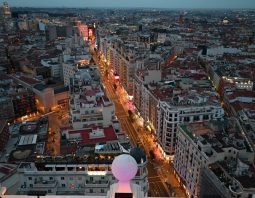
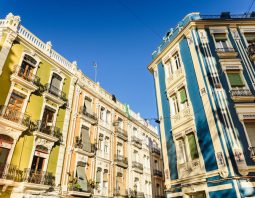
Valencia is the Spanish city wrapped in a whole aura of romance: it is no accident that the Spanish themselves came up with the name La Tierra de las Flores, la Luz y el Amor, literally the Land of Flowers, Light and Love… What a tender and appealing image these beautiful words create in your mind, don’t they?
Today Valencia is one of the cities in Spain most visited by tourists, along with Barcelona, Madrid, Seville and Benidorm, according to the National Statistics Institute (INE).
Tourism plays a significant role in the life of the city, and it has everything needed to sustain and develop it: a wide range of hotels and holiday apartments, excellent local cuisine including restaurants with one or more Michelin stars, the futuristic City of Arts and Sciences, and vivid festivals of impressive scale, such as the fiery and noisy fireworks festival of Las Fallas.
Watch our video “Valencia: the most Spanish city in Spain”
Valencia for tourism
In the ranking of holiday destinations, Barcelona leads, followed by Valencia and Madrid. Germans most often choose Majorca, the French and the English Barcelona, Americans prefer Madrid, while Valencia has particularly won the hearts of Italians. So what makes the city of flowers and love so attractive to European tourists overall?
- Firstly, many EU countries have good air links with Valencia, with plenty of scheduled flights.
- Secondly, the comfortable, warm weather with lots of sunny days is a big draw.
- Thirdly, traditional Valencian recipes offer plenty of delicious dishes, among them paella valenciana, the pumpkin dessert flan de calabaza, home-made pumpkin doughnuts (buñuelos de calabaza), esgarraet, a dish of salt cod with roasted peppers, olives and garlic, the drink horchata, a milk made from tiger nuts, excellent local wines and much, much more!
- Fourthly, the lavish Las Fallas festival with loud fireworks, grand processions and street music (the detailed programme for 2022 can be found here), when the number of tourists in the city grows several times over!
- And fifthly, good domestic transport links, which let you continue your trip and reach the neighbouring resort towns of Spain.
Valencia: sights and things to do
If you arrive in Valencia by train, you can start getting to know the city right at the majestic building of the main railway station, Valencia Estación del Norte, located next to the bullring and two blocks from the Town Hall Square, where from 1 to 19 March a large-scale pyrotechnic show, the mascletàs, is held in the run-up to the feast of San José.
The City of Arts and Sciences in Valencia (Ciudad de las Artes y de las Ciencias)
Valencia is home to a large, ultra-modern European complex built for scientific and cultural purposes. This is the famous City of Arts and Sciences, a successful project by the world-renowned Valencian architect Santiago Calatrava.
The park, with its striking futuristic structures, stretches for almost two kilometres within the dried-up bed of the river Turia, and it consists of six remarkable buildings:
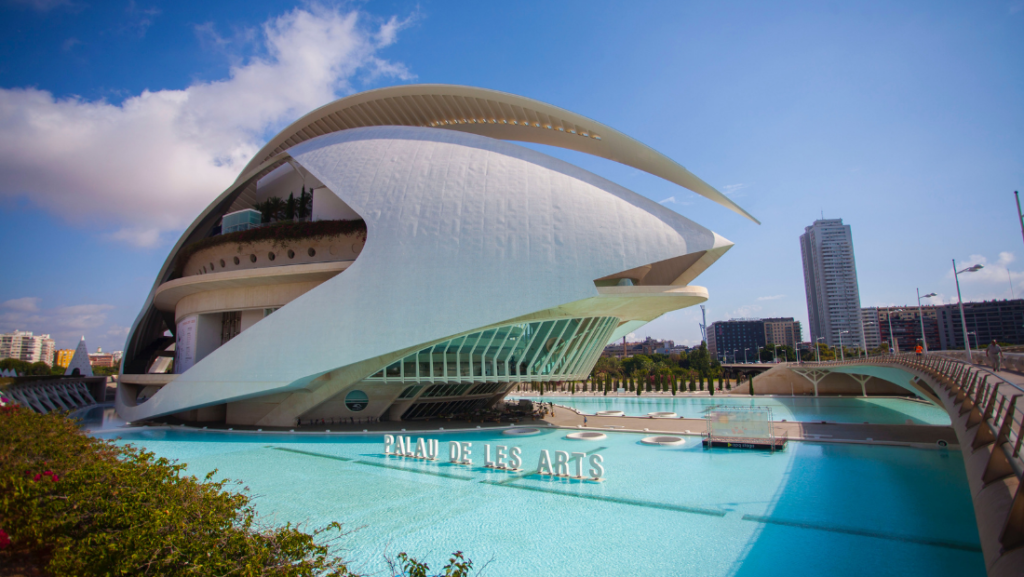
The Queen Sofía Palace of the Arts (El Palau de les Arts Reina Sofía) in Valencia
This snow-white building in the shape of a conquistador’s helmet houses an opera house, four auditoriums that can seat more than four thousand spectators, and many galleries and loggias. This elegant palace constantly hosts a variety of cultural events, including international ones, and outstanding artists come here from many countries.
- Address: Av. del Professor López Piñero, 1, 46013 València, Valencia
- Website: lesarts.com
El Hemisfèric cinema and planetarium in Valencia
This modern cinema with top-class equipment shows IMAX and 3D films. It is the largest cinema auditorium in Spain, with three projection systems on an impressive concave screen measuring a full 900 m²! Fulldome digital projections provide spectacular interactive entertainment shows.
- Address: Av. del Professor López Piñero, 3, 46013 València,
- Valencia. Website: cac.es
The L’Umbracle garden gallery in Valencia
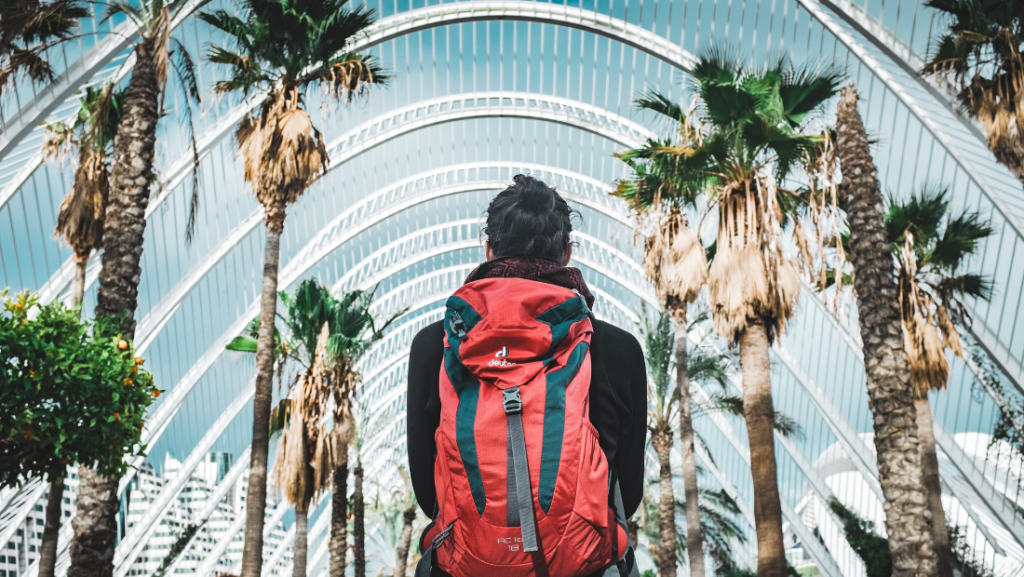
This magnificent conservatory covers more than 17,000 m² and displays more than 5,000 species of remarkable exotic plants. It is also home to the Gallery of Contemporary Sculpture with many exhibits. The viewing platform of this building offers superb views of the other pavilions of the City of Arts and Sciences, as well as of the beautiful artificial ponds and pleasant green areas.
- Address: Av. del Professor López Piñero, 5, 46013 València, Valencia
- Website: umbracleterraza.com
The Príncipe Felipe Science Museum (El Museu de les Ciències Príncipe Felipe) in Valencia
The museum building is shaped like the skeleton of a giant prehistoric animal and invites visitors on educational journeys deep into the past to follow the evolution of our planet. It is best to come here with children: to the delight of young scientists, most of the exhibits can not only be looked at but also set in motion with levers and buttons.
- Address: Ciudad de las Artes y de las Ciencias, Av. del Professor López Piñero, 7, 46013 Valencia
- Website: cac.es
The Oceanographic Park of Valencia (L’Oceanogràfic)
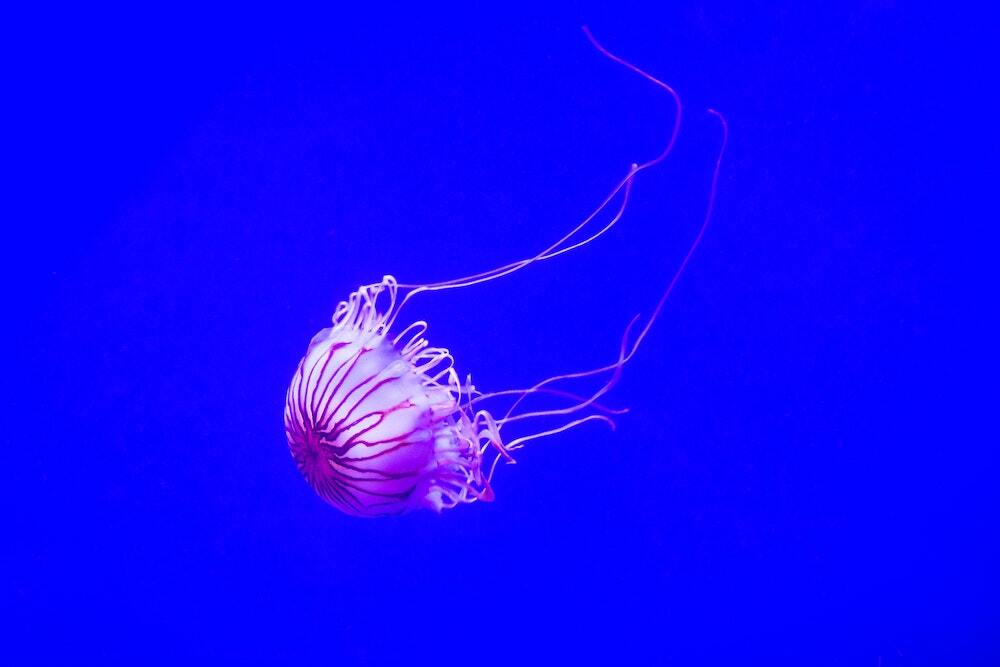
The vast grounds of the oceanographic complex are home to more than 500 species of marine animals, birds, fish, reptiles and invertebrates. The park’s marine life lives in huge two-level aquariums, where it is easy to watch them and admire all this colourful variety. The park has a dozen different zones, including a picturesque garden, a mangrove grove, artificial wetlands, a dolphinarium and aquariums with sea creatures.
- Address: Carrer d’Eduardo Primo Yúfera, 1B, 46013 València, Valencia
- Website: oceanografic.org
The Àgora multi-purpose hall in Valencia
The original idea for this 80-metre structure was to hold large concerts and conferences. Today, however, in addition to these, the pavilion hosts sporting events and fashion shows by international couturiers. And during the children’s Christmas holidays, a huge ice rink is laid in the building, and festive markets and fairy-tale shows are held.
- Address: Plaça Num 130 Res Urb, 124B, 46023 València, Valencia
- Website: cac.es
We have told you about the most modern and large-scale sight in Valencia, but this city of flowers and love has plenty of other remarkable places too.
The Cathedral and the Plaza de la Virgen (La Catedral y la plaza de la Virgen) in Valencia
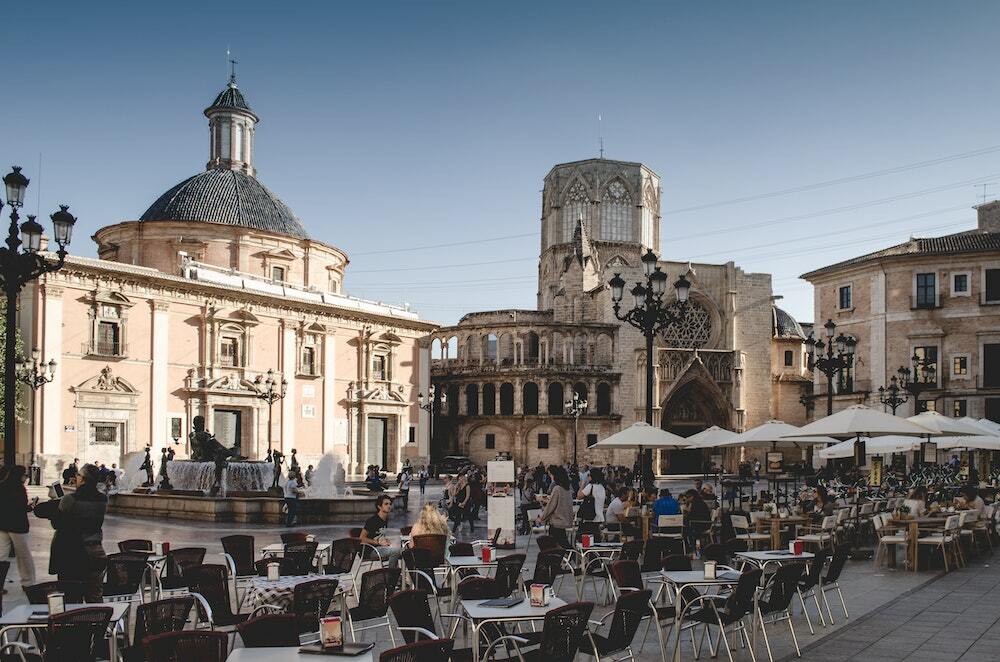
For romantic walks, head to the historic centre of Valencia. There, surrounded by old streets where noble medieval knights once walked, on the Plaza de la Virgen, rises the majestic 13th-century Valencia Cathedral, whose architecture harmoniously blends the ancient Roman style, Gothic and Baroque. The old building holds the Holy Chalice, a priceless Christian relic which, according to recent research, may be the very Holy Grail that Jesus Christ used at the biblical Last Supper. Every year this mystical artefact draws many tourists and believers to the cathedral.
- Address: Plaça de l’Almoina, s/n, 46003 València, Valencia
- Website: catedraldevalencia.es
The Museum of Fine Arts (Museo de Bellas Artes) in Valencia
Housed in the Palacio de San Pío V, founded in 1683, the Museum of Fine Arts of Valencia is the second largest art gallery in Spain after the Prado Museum in Madrid. It displays works by the greatest masters of the 10th to 19th centuries. The room devoted to the work of Francisco Goya deserves particular attention, and you can also admire an unfinished work by Diego Velázquez himself. The museum also has remarkable works by Joaquín Sorolla, Bartolomé Esteban Murillo, El Greco and Anthony van Dyck. The aesthetic pleasure of contemplating world masterpieces is hard to overestimate.
- Address: Carrer de Sant Pius V, 9, 46010 València, Valencia
- Website: museobellasartesvalencia.gva.es
The Central Market of Valencia (Mercado Central de Valencia)
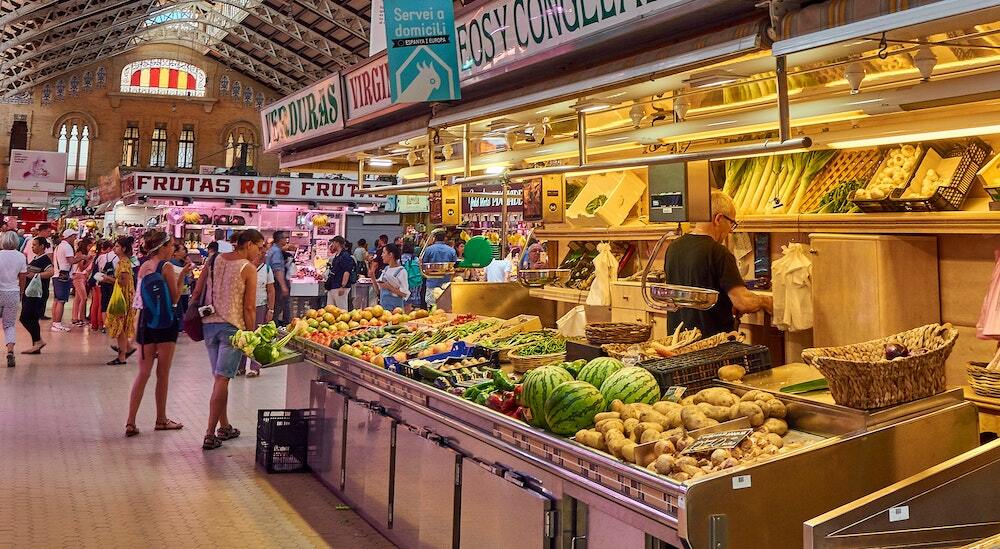
But let us move a little away from the sublime and closer to everyday matters. In the city centre, in a large modern building of more than 8,000 m², stands the rich and bustling Central Market of Valencia. It offers a huge range of goods, the best produce of Valencia and the rest of Spain, and is considered the largest fresh food market in Europe. There are more than 1,200 stalls, and any food lover who ends up here will hardly be able to resist such an abundance and variety of fresh produce and leave without buying something.
- Address: Plaça de la Ciutat de Bruges, s/n, 46001 València, Valencia
- Website: mercadocentralvalencia.es
The Marina de Valencia promenade (El Paseo Marina de Valencia)
Next to the city’s seaside district of El Cabanyal lies the Marina de Valencia promenade. An evening stroll along this wide seafront is best combined with a visit to one of the restaurants to try an authentic, genuine Valencian paella. For example, the seafront is home to the historic restaurant La Pepica with beautiful sea views: the famous Valencian painter Joaquín Sorolla, the writer Vicente Blasco Ibáñez and Ernest Hemingway, a great admirer of Spain, once enjoyed paella here.
- Address: Passeig de Neptú, 6, BAJO;DUP 6-8, 46011 Valencia
- Website: lapepica.com
Albufera Natural Park (Parque Natural de la Albufera)

On the outskirts of the city of Valencia lies the local residents’ true “place of power”, the Albufera Natural Park, a picturesque, quiet spot where Valencians love to go to switch off from everyday worries and the stress of the big city and simply spend some quiet time alone with nature. The Albufera is surrounded by woodland and rice fields. Here you can take a romantic boat trip on the water and watch herons and ducks flying overhead. The sunsets in this park are considered among the most beautiful in Spain. It is also the ideal place to taste a local Valencian paella made to the recipes of the farmers who live in the area.
Which place in Valencia, the city of flowers and love, seems the most tempting and romantic to you, and where would you go first?