Utilities in Spain include:
- Water
- Electricity
- Gas
- Garbage collection
- Condominium services
- Internet
Water bill in Spain
Local municipal companies supply water to households and set prices depending on the size of the municipality, the water treatment system, and the water supply system. Even in two neighboring towns, the price per cubic meter of water can differ significantly; according to statistics, the difference in water prices across Spain reaches 435%. The water bill always includes sewerage as well as various taxes, charges, and fees. The price is set per cubic meter, and a progressive scale is almost always applied: once a certain volume is reached, the price may increase several times over. Therefore, expenses for a house with a garden and swimming pool are incomparable to those for ordinary apartments. Usually, the water bill is issued quarterly, and if the owner wishes, payments can be debited automatically from the account: for this, it is necessary to open an account with any commercial bank with a Spanish IBAN. With a consumption of 10-15 m3 of water per month, the bill will amount to €15-45. On average, a family in Spain spends from €30 to €50 per month on water, that is, from €360 to €600 per year.
Debt on water bills may lead to the service being disconnected: a technician from the water supply company will shut off and seal the valve near the meter. When buying property in Spain, it is important to make sure there are no unpaid utility debts. In the case of water, the supplier company may refuse to reconnect the service until the debt is paid off. When purchasing bank-owned property with disconnected services and terminated utility contracts, a second occupancy license (licencia de segunda ocupación) or a certificate of habitability (cédula de habitabilidad) from the local urban planning department may be required.
Electricity costs in Spain
Electricity can be considered one of the most expensive utilities in Spain. Many apartments and houses are fully electrified, so in addition to the usual load from household appliances and lighting, there is also heating in winter and cooling in summer. In 2025, electricity costs increased because VAT (IVA) returned to the standard 21% rate. In addition, between 2024 and 2025, other taxes also increased – the special electricity tax and the tax on the value of produced electricity. At present, taxes, duties, and charges in electricity invoices have reached 36.5%. In Spain, there are several dozen energy companies at the national and regional levels. The largest is Iberdrola, followed by Endesa and Repsol. There has not been much variation in prices lately; a kilowatt costs between €0.08 and €0.15. The most popular tariff today is Iberdrola’s 24-hour Plan Online. When choosing a company, it is necessary to consider not only the price per kilowatt of electricity actually consumed, but also other factors. The final amount of the invoice is affected by:
- Contracted power at the connection point – this is the fixed part of the bill: the higher the allocated power, the higher the amount to be paid.
- Type of electricity tariff: 24-hour, day/night, and others.
- Additional services connected with the supplier company (for example, insurance for household appliances against power surges).
- The actual volume of electricity consumption during the billing period.
- Regulated charges (taxes and duties).
- Meter rental.
- And finally, the energy efficiency class of household appliances, light bulbs, and other devices.
On average, electricity consumption per person per month is 150-200 kWh, which corresponds to a total invoice amount of €40-70. If a family uses gas for heating water and/or cooking, electricity bills will be significantly lower. On average, according to statistics, a household in Spain spends from €60 to €100 per month on electricity, which amounts to €720 to €1,200 per year.
Gas costs in Spain
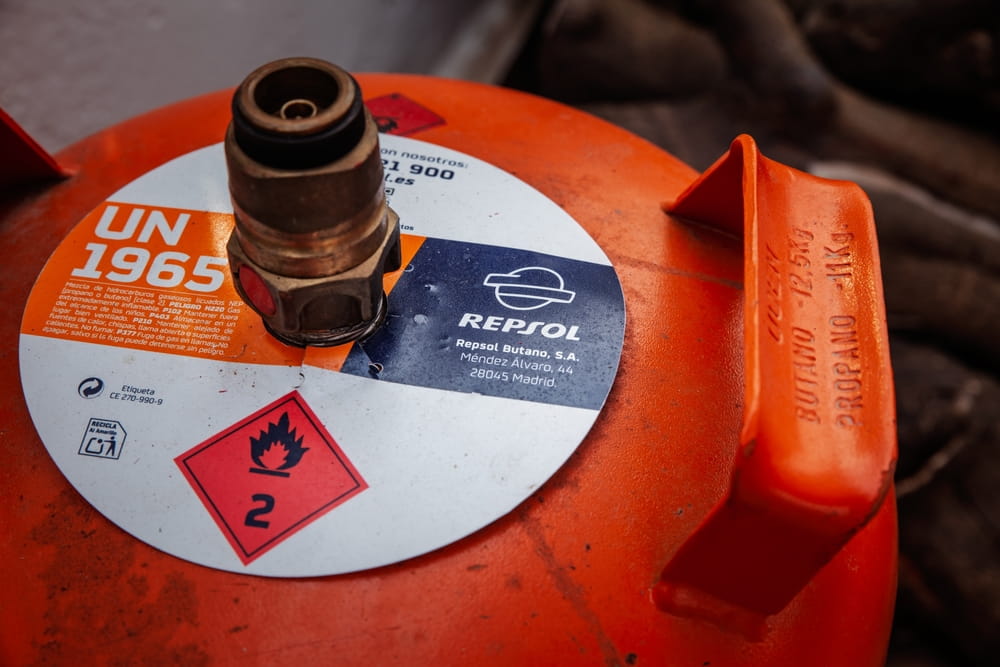
Due to the absence of a central gas supply system in Spain, there are two possible options: gasification of an individual residential complex with gas distributed to the apartments, or the individual purchase of gas cylinders. If the home has a gas stove and a gas water heater and cylinders are used, it is recommended to keep three cylinders: two connected and one spare. Cylinders can be replaced independently at petrol stations or ordered for home delivery. A standard 12.5 kg butane cylinder in 2026 costs about €15.60. Such a cylinder will last 2-3 months for cooking for 1-2 people, and 3-5 weeks for a gas heater. If the residential complex is responsible for gas procurement, payment is made according to the meter. An average household may spend from €40 to €80 per month if heating runs on gas, which amounts to €480-960 per year.
Garbage collection fee
The garbage collection fee is a municipal tax and charge. All homeowners are required to pay it, whether for their main residence or second and subsequent properties. The fee allows the municipality to cover the costs of garbage collection and disposal services. As a rule, bills are issued every six months. The amount of the fee can vary significantly even within the same municipality from one area to another: it all depends on remoteness and the complexity of access for collection vehicles. On average, the fee ranges from €100 to €300 per year.

Condominium fees (community of owners)
If the property is not a detached private house that does not form part of any urbanization or residential complex, owners have to pay for condominium services – gastos de comunidad. These are essentially the community expenses of residents for the use of common areas. Usually, owners of apartments or houses pay a proportional share, calculated as the ratio of the size of their property to the total area of the condominium. Community expenses include services such as electricity/lighting in common areas, water, swimming pools (maintenance and lifeguards), insurance, maintenance of elevators, automatic gates and sports facilities, cleaning and concierge services, surveillance cameras, security, property management services, and much more. In addition, if a decision is made on extra contributions (derrama) for major, extraordinary, or emergency works or facade repairs, the amount payable to the condominium may increase significantly. In Spain, condominium fees average from €30 to €100 per month (€360-1,200 per year). Invoices may be issued monthly, quarterly, or even every six months. It is not uncommon for payment to be made directly at the management company’s office, bypassing the bank. Debt on gastos de comunidad may lead to sanctions: loss of voting rights on the agenda at the general meeting of owners, prohibition from using swimming pools and other communal services, and, in the event of a large debt, court proceedings to recover the amount due may be initiated.
Internet costs
Fiber-optic internet in Spain at 300 Mb – 600 Mb costs on average from €20 to €30 per month, while 1 Gbps is €5-10 more expensive. Many operators offer whole packages including television, cloud storage, mobile phone service, etc. In this case, the price may amount to €50-60 per month (€600-720 per year). Very often, significant discounts are offered for the first 12 months provided that the contract is not terminated.
Planning to buy a home in Spain?
Compare new developments and estimate your future monthly property maintenance costs in advance.