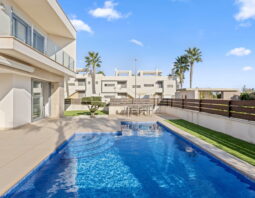
San Pedro del Pinatar is perhaps the ideal place to live and invest in Spain. Why? Below we tell you everything about this beautiful town that you will find useful and interesting to know. Let’s begin.
Where is San Pedro del Pinatar?
This picturesque seaside town lies in the Region of Murcia, an autonomous community in south-eastern Spain. San Pedro del Pinatar sits snugly between two seas: the Mediterranean and the Mar Menor, the largest saltwater lagoon in Europe. This unique location makes the town an excellent choice for permanent living, for seaside holidays and for investing in European property.
The town’s location provides easy access to the main transport hubs of the region and to the neighbouring Costa Blanca resorts.
- To Cartagena: about 35 km;
- To Murcia: about 50 km;
- To Alicante: about 75 km.
How do you get to the town?
Getting to San Pedro del Pinatar is easy and convenient:
- Región de Murcia International Airport (RMU) is just a 30-minute drive away;
- Alicante-Elche Airport (ALC) is 50 minutes away.
By road, the town is connected to other towns by the AP-7 motorway and the N-332, and it is served by intercity buses. If you prefer to drive, access is easy and town parking is affordable, especially in the new residential areas.
Climate and weather in San Pedro del Pinatar by season
San Pedro del Pinatar is known for its mild Mediterranean climate: you can enjoy more than 300 days of sunshine a year, low rainfall and comfortable temperatures in every season.
In winter the temperature rarely drops below +12°C, and the sun shines almost every day, whatever the time of year.
In spring the town comes to life: temperatures rise to +25°C, the orange trees blossom and the seasonal cafés open.
Summer is especially lively and busy: it is hot, but the sea breeze makes the heat easy to bear. The average air temperature in July and August is +30-32°C, and the water in the Mar Menor can reach +28°C, one of the highest sea temperatures in Europe. This makes the resort especially attractive for families with children.
Autumn brings the gentle late season, ideal for long walks and swimming without the crowds. In September the air stays at around +27-29°C, in October +23-25°C, and the water in the lagoon stays warm right up to November.
Thanks to this favourable climate, San Pedro is considered an excellent place for retirees, families with children and people who look after their health.
A brief history of San Pedro del Pinatar
San Pedro del Pinatar has a rich historical and cultural heritage that has left its mark on its architecture, traditions and way of life. The town’s name, San Pedro del Pinatar, translates as “Saint Peter of the pine forest” and refers both to the ancient pine woods that once covered the area and to the religious tradition of venerating the Apostle Peter.
In ancient times there were Roman settlements on the site of the modern town. Their main activity was extracting salt from the coastal lagoons, and salt was already prized as “white gold”. Archaeological finds confirm active trade and shipping in the area.
In the Middle Ages, after the Reconquista (the reconquest of the land from Muslim rule), the area became part of the Christian kingdoms of Castile. The first permanent fishing settlements appeared here, and defensive towers were built to protect against pirates.
From the 17th century San Pedro del Pinatar became an important port for coastal trade. Salt extraction, fishing and fish salting became the main sources of income. From then on the town began to develop actively, both economically and socially.
The 20th century brought key changes: the salt works were modernised, the first schools and medical facilities opened, and the roads improved. In the 1960s and 1970s, with the growth of tourism, San Pedro del Pinatar turned from a fishing village into a popular resort town, which spurred a boom in residential construction and the appearance of new neighbourhoods, including ones for interested foreign residents.
Today the town keeps developing while preserving its authenticity and its link with seafaring traditions. Its history can be felt in practically every quarter, from the old churches to the ports and the salt lagoons.
Sights of San Pedro del Pinatar
The town is rich in interesting places, from natural spots to cultural and historical sites. Below we list the main attractions for visitors and locals.
The salt lagoons nature park (Parque Regional de las Salinas y Arenales de San Pedro del Pinatar)
One of the town’s main gems is a protected nature park covering more than 850 hectares. It is home to the famous salt lagoons, where sea salt has been harvested since ancient times. The park is not just a site of ecological importance but a real paradise for nature lovers: here you can watch flamingos, herons, gulls and many other birds.
Visitors will find wooden boardwalks, cycle routes, viewing points and even areas of therapeutic mud, where you can enjoy a full spa treatment right in the open air.
Church of Saint Peter (Iglesia de San Pedro Apóstol)
This elegant church in the very centre of town was built in the 18th century and is dedicated to the patron saint of the area, Saint Peter. The building is in the Spanish Baroque style and is beautifully finished both outside and inside.
This historic building is often the centre of the town’s cultural and religious life, especially during holidays and festivals. The church is surrounded by cosy cafés, fountains and the town square, where locals love to spend time.
Lo Pagán promenade (Paseo Marítimo de Lo Pagán)
Lo Pagán is a picturesque coastal district that is part of the town. The promenade runs along the calm beaches of the Mar Menor and is ideal for walks, cycling and dinners with a view of the sunset.
There are plenty of restaurants where you can try fresh seafood, the local arroz caldero and the famous tapas. In the evening the promenade fills with a cosy atmosphere and the sea breeze: it is everyone’s favourite place for a stroll, whether tourists, local families, groups of friends or people on their own.
Museum of the Sea and Salt (Museo del Mar y de la Sal)
This compact museum, packed with exhibits, is devoted to the history of fishing, boatbuilding and salt production in the region. Here you can see old boats, maps, tools and models showing how the town developed over the centuries.
Particular attention is paid to traditional salt-making methods and the role of maritime trade. The museum is a great place for a family outing and a chance to understand the culture of the region more deeply.
Amenities and the property market in San Pedro del Pinatar
San Pedro del Pinatar is a town with well-developed infrastructure, plenty of everyday conveniences and high-quality municipal services. Despite its small size (22.32 km²) and population (28,835 people, INE, 2024), it has everything you need:
- Education: state and private schools, nurseries;
- Healthcare: health centres, pharmacies, private clinics, dentists;
- Shops and services: supermarkets (Mercadona, Aldi, Lidl), markets, banks, post offices (Correos);
- Leisure: bars, restaurants, yoga centres, gyms;
- Transport: bus services, taxis, car hire.
Each of the residential areas of San Pedro del Pinatar has its own character and attractions, so take your pick!
El Mojón – Las Salinas
An area by the border with the province of Alicante, with access to the Mediterranean and the Las Salinas nature park. Quiet and lightly built up, with superb sandy beaches and wild nature close by. Ideal for those who value privacy and walks by the sea.
Lo Pagán
The most touristy and lively area, on the shore of the Mar Menor. It has the famous promenade, thalassotherapy centres, mud baths, restaurants and shops. There are many new developments and apartments. An excellent choice for holidays and for letting.
Los Cuarteros
A quiet, peaceful residential area a little back from the sea, with well-developed amenities for year-round living: schools, shops, supermarkets and a local market. Suitable for families with children and older people. You will appreciate its more affordable property prices.
Los Peñascos – El Salero – Los Imbernones
A cluster of small neighbourhoods between Lo Pagán and the town centre. It combines residential estates (urbanizaciones), bungalows, parks and proximity to the salt lagoons. A lot of new homes are being built in the area, and it attracts both Spanish and foreign buyers.
San Pedro del Pinatar (centre)
The historic part of town, with squares, municipal buildings and the church of San Pedro Apóstol. This is where the business and administrative life of the municipality is concentrated. Property here is mainly resale, with many townhouses, old villas and buildings in classic style.
The property market in San Pedro del Pinatar: trends and prospects
According to idealista.com, in the second quarter of 2025 the average home price in the town was €2,027/m², an impressive annual rise of +45.9%! This shows confident demand and the growing investment appeal of the area.
Property types:
- Modern apartments (€2,673/m²) and penthouses (€3,335/m²);
- Spacious duplexes (€1,845/m²) and attractive villas (€1,880/m²) with pools;
- Cosy townhouses (€1,898/m²) with terraces;
- Other options: houses to renovate (€1,531/m²) and plots of land (€386/m²).
So San Pedro del Pinatar offers plenty of options both for permanent living and for buying property to let.
Why buy a home here, and why now?
San Pedro del Pinatar is a rare combination of a seaside resort, a nature reserve and a quiet Spanish town with a cosy, traditional atmosphere. No wonder more and more people are choosing it to live in, holiday in or invest in.
Its unique location between two seas, the Mediterranean and the Mar Menor, lets you enjoy two types of coastline and climate at once. One sea is calm, warm and shallow, ideal for families with children; the other is open, cooler and more scenic.
The environment here is one of the cleanest in south-eastern Spain. The absence of large industrial sites, the nearby nature park, the sea air and the quiet make San Pedro especially attractive for older people, families and anyone looking for health and peace.
The town’s infrastructure skilfully combines the features of a resort and a fully fledged town: there are schools, health centres, gyms, shops, markets, transport, restaurants and cultural life. All this makes living here comfortable all year round, not just in season.
Property prices here are still lower than in the better-known parts of the Costa Blanca, while the quality of housing, especially new builds, is high. The market is growing actively and demand is rising, which makes buying a home in San Pedro a promising investment with good growth potential.
An added bonus is safety and a friendly atmosphere. The town has an active international community: it is easy to settle in, make friends and feel part of local life.
San Pedro del Pinatar vs Torrevieja: which to choose?
If you are choosing between buying a home in San Pedro del Pinatar and the better-known Torrevieja, the “Russian capital of Spain”, the comparison below will help you make an informed decision that is right for you.
Size and atmosphere
- Torrevieja is a large, lively resort town with a population of over 100,000. It has lots of tourists, a busy nightlife and dense development.
- San Pedro del Pinatar is a more compact and quieter town (~29,000 residents), without unnecessary bustle. The atmosphere is relaxed and homely, more like a real Spanish coastal town than a tourist metropolis.
Property and prices in San Pedro del Pinatar
Torrevieja has more older property, resale homes and large estates (urbanizaciones), and new neighbourhoods are being built actively on its outskirts. Apartment prices closer to the tourist centre and the sea are often higher.
San Pedro del Pinatar has many new builds, modern developments and complexes with terraces, pools and underground parking.
- Average price in San Pedro del Pinatar (Q2 2025): €2,027/m².
- Average price in Torrevieja: about €1,780/m² (idealista.com, same period).
Conclusion: in Torrevieja you can find cheaper homes, but in San Pedro del Pinatar you get higher-quality, more modern housing in a quieter setting.
Nature and the sea in San Pedro del Pinatar
Torrevieja lies between two salt lagoons, but you usually reach the sea through built-up areas. The town’s beaches are lively and crowded, especially in summer.
In San Pedro you have the Mar Menor, a shallow, warm sea that is ideal for children and older people, as well as clean Mediterranean beaches separated by the nature park. There is more privacy and more nature here.
Who is each town best for?
| Torrevieja | San Pedro del Pinatar |
| Young people looking for an active life | Families with children, retirees |
| Tenants and short-term rental investors | Buyers of property to live in and long-term investors |
| Those who dream of a “city by the sea” | Those looking for “a small seaside town with urban comforts” |
To sum up, San Pedro del Pinatar is a sensible alternative to Torrevieja for those looking for a quieter, greener and more family-friendly place by the sea. It is clean and quiet, the amenities are just as good, and there are even more new builds. It is a good choice if you want to live in Spain long term rather than just holiday here.
However, the choice is always yours, and the Alegria Premium team is always on hand to help you make your dream of living on the Spanish coast come true.