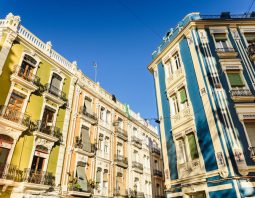
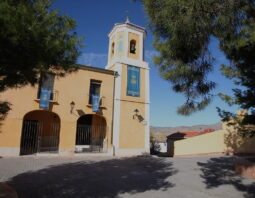
Benissa is an old town and one of the most popular resorts on the Costa Blanca. Small in population and area (fewer than 14,000 people live in an area of about 70 km²), it is nevertheless hugely popular with Spaniards and foreigners alike.
According to the town hall, foreigners make up more than 40% of the population, which makes Benissa a truly cosmopolitan town. The first to appreciate the beauty of this place were the Germans and the British, then the Scandinavians followed, and throughout the last decade demand for homes in Benissa from Russian-speaking buyers has been growing steadily.
Along with Moraira and Benitachell in the north of the province of Alicante, Benissa has become a centre of high-end and luxury property. The coastal terrain and the high rocky shore are ideal for building multi-level villas with panoramic sea views.
Where is Benissa and how do you get there?
Benissa’s administrative location: the comarca (district) of Marina Alta, province of Alicante, Valencian Community. Alicante airport is 87 km away (about 1 hour by car) and Valencia airport 119 km (about 1 hour 10 minutes by car). There are also direct bus routes from Alicante and Valencia.
A convenient network of motorways and roads links Benissa with neighbouring towns and other regions of Spain. The most popular resorts of the northern Costa Blanca, Dénia (25 km), Jávea (17 km), Moraira (12 km), Calpe (10 km) and Altea (25 km), are just minutes away by car. Alicante, the provincial capital and the region’s main transport hub, is only 70 km away (40-50 minutes by car).
Nature and sport in Benissa

Benissa’s historic centre is about 5 km from the coast, but its residential districts and estates (urbanizaciones) run right down to La Fustera beach and the neighbouring coves. The beach, rocky coves, surrounding mountain ranges, nature reserves and parks are Benissa’s calling card.
Benissa and its surroundings are a paradise for sports lovers: hiking and cycling, rock climbing and all kinds of water sports can be enjoyed all year round thanks to the warm Mediterranean climate. Benissa has a diving school, a sailing school, a riding school, a golf club and two tennis clubs.
The most popular walking route is the Paseo Ecológico de Benissa (Benissa eco-trail), which starts at La Calalga cove (Cala La Calalga) in the south of the municipality, runs along the sea and ends 4 km later at Baladrar cove (Cala Baladrar). The path passes all of Benissa’s scenic beaches and coves:
- Mallorquí cove (Cala del Mallorquí), a rocky cove ideal for diving,
- Les Bassetes cove (Cala les Bassetes), a small sandy cove popular with anglers, and the marina of the same name;
- La Fustera beach (Playa de La Fustera), a very well-equipped sandy beach that receives the highest mark for cleanliness and quality, the Blue Flag, every year;
- Pinets cove (Cala Pinets), a secluded cove of sand and pebbles and a favourite spot for families;
- La Llobella cove (Cala de la Llobella), the most secluded pebble cove, with crystal-clear water,
- Advocat cove (Cala Advocat), a scenic cove of fine pebbles and sand, protected from strong waves by a breakwater.
Benissa lies in the comarca of Marina Alta (the northern administrative district of the province of Alicante). Marina Alta leads all the comarcas in the number of nature reserves and parks: it has 66 protected natural areas. That is why Benissa and its surroundings are a paradise for nature lovers and for cycling and mountain walking routes of varying length and difficulty.
Popular walking routes include:
- Ruta dels Riberers: a moderate route about 13 km long;
- Ruta de Oltà: a moderate route about 9.5 km long;
- Ruta Sierra de Bèrnia i Ferrer: a challenging route about 8.5 km long;
- Ruta La Solana: a moderate route about 14.5 km long;
- Ruta del Molí del Quisi: a moderate route about 9 km long;
- Caminos de piedra y agua: an easy route 19.5 km long.
Route maps and all the useful information can be found on the Benissa website.
A little history of Benissa and its sights

The northern Costa Blanca has been inhabited since ancient times. People lived here thousands of years ago, in prehistoric times, as shown by the rock paintings that scientists found in caves at a place called Pinos. The Iberians and the ancient Romans did not pass this part of the coast by either. Benissa grew from a small settlement into a proper town under the Moors, who also gave it its name (from the ruling Arab dynasty Banu Isa). At the beginning of the 17th century the Muslims were expelled from the town and Benissa passed into Spanish hands, but many Arabic names have survived to this day.
Benissa’s sights include a number of old buildings and structures:
- The town hall, built at the end of the 18th century and originally used as the town hospital;
- Old Church Square and the church of the Puríssima Xiqueta, better known as the Catedral La Marina;
- The 16th-century La Lonja exchange building, used as an exhibition centre;
- The houses of wealthy Benissa families, Casa dels Andrés and Casa de Pere Bigot, which now house a branch of the University of Alicante;
- Abargues, a private mansion turned into a house museum;
- The Riberero monument, dedicated to the poor farmers and labourers who had to leave their homes in search of work;
- The Franciscan Monastery (Convento de los Padres Franciscanos), whose history goes back to the early 17th century, and the Franciscan Seminary.
- The public library and the Municipal Cultural Centre, housed in the 16th-century Torres-Orduña palace.
Food and wine in Benissa
Benissa’s cuisine deserves special attention. Besides traditional Mediterranean fish and seafood dishes, Benissa is especially fond of meatballs, as well as the octopus stew “Putxero de Polp”, the frigate tuna stew “Borreta Melva”, the tuna stew “Bull amb ceba” and “Mullador de sangatxo”. Few will be left indifferent by the fire-baked pies “Coques de Mullador” or by the corn flatbreads filled with vegetables, sausages and cod. Incidentally, Benissa’s sausages are considered among the best not only in the Marina Alta comarca but in the whole province: you can try and buy them in the town’s butchers and sausage shops.
And, of course, we cannot leave out the wines: winemaking in Benissa goes back centuries, and the municipality still grows indigenous (that is, local, native) grape varieties: Muscat of Alexandria (Muscat d’Alexandrie), used for white wines, and Giro, used for red wines. We recommend trying the dry white Muscat wines Nimi and Nimi Tossal, the sweet white wine Nimi Naturalment Dolç, made from overripe, partly dried grapes without added sugar or alcohol, and the dry red wine Terra Fiter, made from Giro grapes.
Benissa is part of the Alicante Wine Route (Ruta del vino de Alicante) and also offers its own routes for getting to know the local vineyards: Ruta al Molí del Quisi and La ruta del Moscatel. Two large wineries offer tasting tours by appointment: el Celler Joan de la Casa and la Bodega Uvas Cabrera.
Benissa’s districts and property

Benissa is divided into four districts:
- Benissa pueblo: the largest district, around the historic town centre;
- La Fustera: the southern district next to the beach of the same name;
- Cala Advocat – Baladrar: a coastal district with some of the most scenic coves on the coast;
- La Viña – Montemar – San Jaime: a small district in the north of the municipality that does not border the sea.
The average price per square metre of resale homes in Benissa in April 2022 was €3,253/m². In terms of house prices, Benissa can rival its neighbouring municipalities Moraira, Teulada and Benitachell, the most expensive in the province of Alicante.
Benissa pueblo is the most affordable district. Housing here costs €2,191/m² on average. The cheapest properties (studios and one-bedroom apartments), which often need renovation, can be found from €60,000. Townhouses in good condition cost from €200,000 upwards. A spacious detached house will cost at least €385,000.
La Fustera is mid-range in terms of house prices: housing here costs €3,326/m². Prices for small apartments in this district start from €155,000. You can find a townhouse for €220,000, while a good detached house with a sea view will cost at least €450,000 (houses without a sea view are considerably cheaper).
Cala Advocat – Baladrar is the most expensive district. Housing here costs €5,241/m² on average. This is where the most exclusive villas and mansions are built. Small apartments and bungalows can be bought for €170,000 to €215,000. Prices for small townhouses start from €300,000.
Spacious villas with panoramic sea views sell from €1,800,000.
In terms of prices, La Viña – Montemar – San Jaime sits between Cala Advocat – Baladrar and La Fustera. Housing here costs €4,007/m² on average. Prices for apartments in modern developments start from €180,000. Detached country houses and cottages sell for €250,000 to €350,000. A modern villa will cost more than €1,000,000.
You can browse property in Benissa in our property search. You can also put any questions you have about buying property in Benissa, or property in other towns in Spain, to our sales consultants.