Sooner or later, many people who live in Spain start thinking about buying or chartering a yacht. You do not have to be a seasoned sailor or a hardened old salt to want to swap dry land for a rolling deck. When you have walked and driven everywhere within reach, when you want new experiences and new horizons, the idea of sea voyages and a yacht comes to mind.
A yacht in Spain has long ceased to be a sign of luxury; it is rather one more way to vary your leisure time and make the most of Spain’s climate and geography. Thanks to its superb year-round climate, the country is ideal for outdoor sports: golf, tennis, sailing and so on.
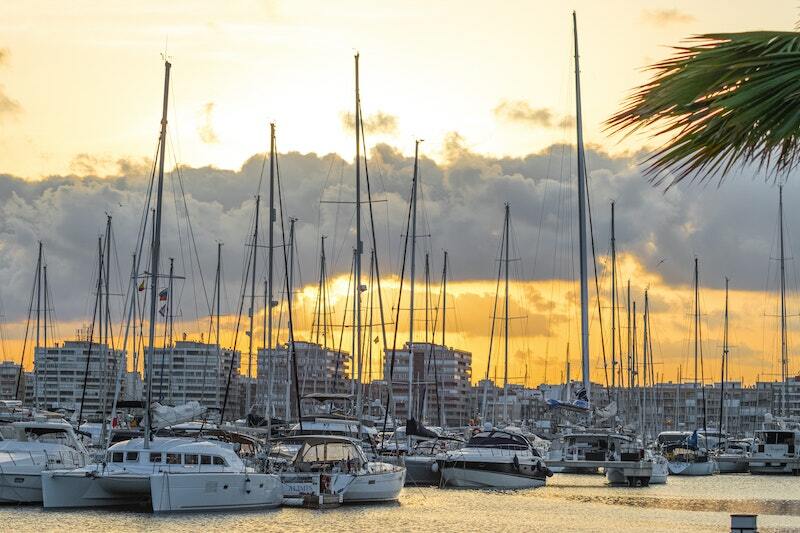
All kinds of vessels are in demand in Spain: sailing yachts, motor yachts, catamarans and small motorboats. Sailing in particular is hugely popular: it is no accident that numerous regattas are held in Spain every year.
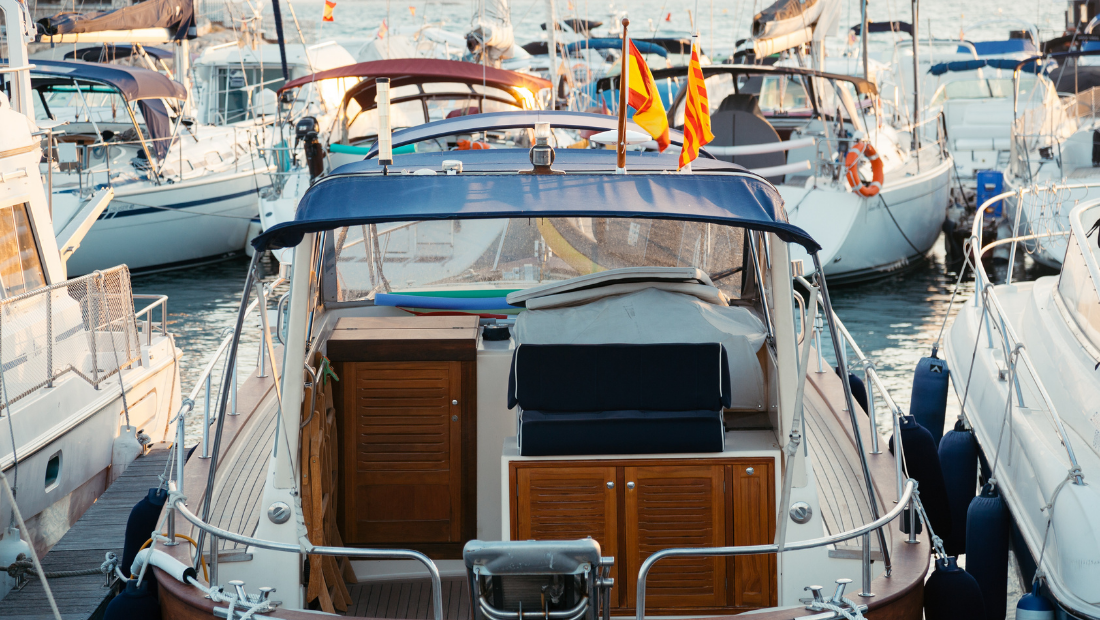
The long coastline and the two archipelagos (the Canary Islands and the Balearic Islands) are ideal for the growth and popularity of sailing. Convenient marinas (yacht harbours) exist not only in every large city but even in the smallest coastal villages. So sailors and travellers always have somewhere to sit out bad weather (rare in Spain, but it does happen), carry out repairs or servicing, leave their boat for the winter, or simply moor up and go sightseeing or shopping.
The best-known marinas in Spain
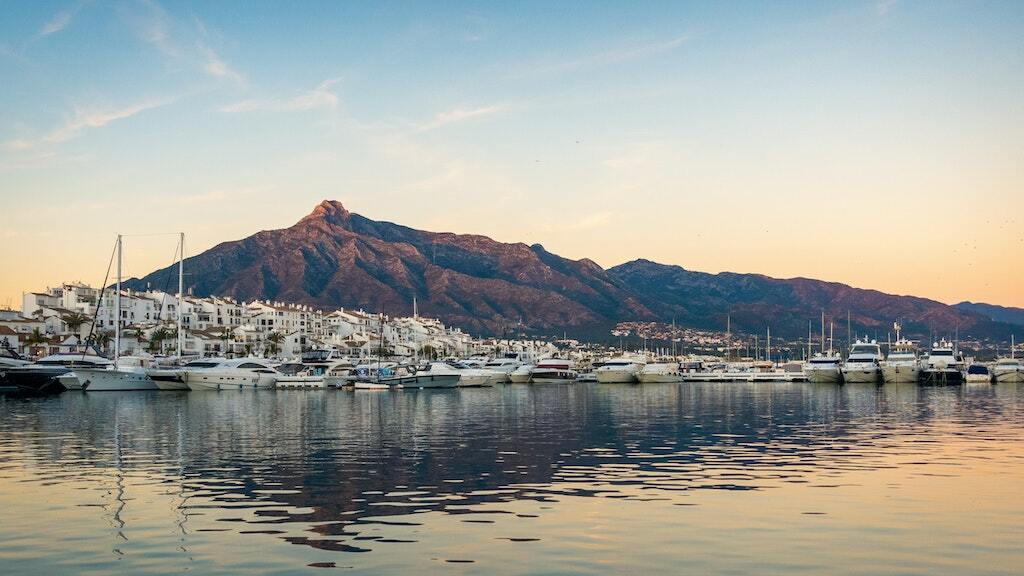
The best-known marinas in Mallorca are the Real Club Náutico de Palma, the harbour of Portocolom, the Club Náutico Cala Ratjada and Porto Cristo.
On the Costa Blanca, the best marinas are in Gandía, Moraira, Villajoyosa, Cullera, Jávea, Calpe, Altea, El Campello, Dénia and Alicante.
On the Costa Brava you will find several dozen excellent marinas: they exist in practically every seaside town and village. The best known, however, is probably the marina of Empuriabrava, a town built on canals and known as the “Spanish Venice”. This marina alone has 5,000 berths.
The Barcelona coast has some fifteen yacht harbours, both in the Catalan capital itself and in all its suburbs.
The Costa Dorada is a match for the Costa Brava in the number of marinas. The best known are the Tarragona marina, the Club Náutico Cambrils, the port of Torredembarra, the port of Vilanova, the Club Náutico L’Ampolla and the Benicarló marina.
But the most famous, most expensive and most glamorous marinas in Spain are, of course, on the Costa del Sol, the coast of the Andalusian province of Málaga, which stretches from Granada and its Costa Tropical in the east to Gibraltar in the west.
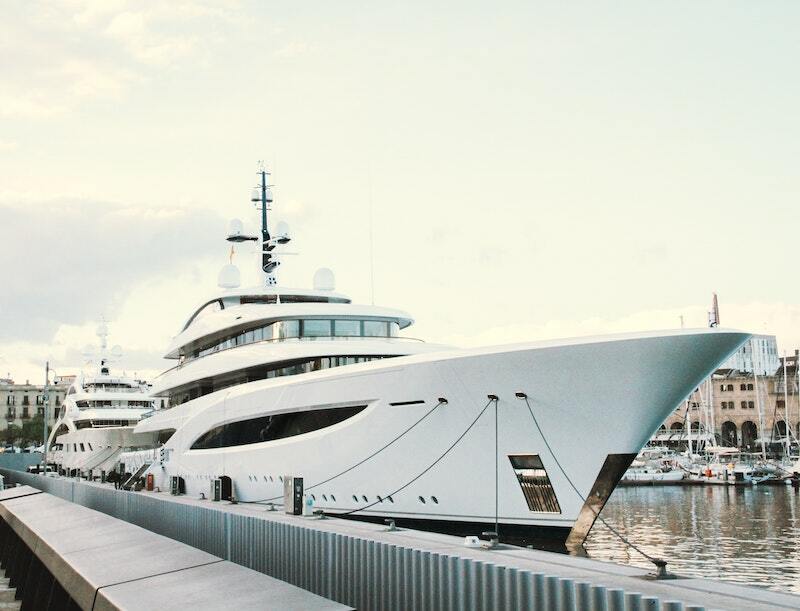
Puerto Banús is the marina whose moorings are designed specifically for superyachts (that is, yachts more than 30 m long).
In high season a berth in this port can cost more than €1,000 a day. In Puerto Banús you will often see the yachts of Arab royal families, glamorous celebrities from fashion and the arts, sports stars and other wealthy people.
Besides the luxury yachts, Puerto Banús often lets you admire the latest models of luxury cars and supercars. Among the other marinas of the Costa del Sol, those of Benalmádena, Estepona and Sotogrande stand out.
Buying a yacht in Spain: prices and paperwork

As with property or cars in Spain, you can buy a yacht in Spain second-hand or brand new from the shipyard. Many agencies and firms buy and sell yachts, both new and used, and offer related services at the same time: paperwork, insurance, repairs, winter storage, charter and so on.
The largest fair of new and used yachts is held every year in the Catalan town of Empuriabrava. It is called the Feria del Barco de Ocasión del Puerto de Empuriabrava and usually takes place during Easter week. New boats on sale are labelled “Milla 0” (zero miles), meaning they have neither mileage nor registration.
During the fair, anyone who has the necessary training and feels confident can sit the exams for a licence to skipper a yacht. There are two types of licence: basic navigation skipper (Patrón de Navegación Básico) and recreational boat skipper (Patrón de Embarcación de Recreo).
Buying a yacht in Spain works much like buying property: the buyer reserves the boat they like and pays the seller a deposit of 10-15% of the agreed price, after which a purchase contract is drawn up, and the balance is paid when it is signed.
Every sale must be registered in the special Register of Ships of the regional merchant navy office. The register is chosen either according to the boat’s home port or freely in the case of boats registered in List 7 of the register (sports and pleasure boats with a deck longer than 2.5 m, built in Spain or imported from another country, and bought for personal use: sport, leisure, non-professional fishing).
The set of documents may vary with the type of boat (Spanish, foreign, new, second-hand and so on) and with the buyer’s status (private individual or company). The main documents, however, are the following:
- An application on the official form.
- The boat’s registration document.
- The certificate of seaworthiness.
- A third-party liability insurance policy.
- A register extract showing the current home port.
- The purchase contract.
- A copy of the identity documents of the seller and the buyer, or consent to check the details electronically.
- A copy of the tax return for transfer tax and stamp duty (Impuesto de Transmisiones Patrimoniales y Actos Jurídicos Documentados) on form 600 or 620, if a second-hand boat is being bought.
In some cases, a copy of the return for the special tax on certain means of transport (Impuesto Especial sobre Determinados Medios de Transporte) on form 565 or 576.
When buying a new yacht, the buyer pays VAT (IVA) at 21% and a registration tax (Impuesto de matriculación) at 12%. The second tax applies only to boats with a deck longer than 8 m. Buying a second-hand yacht is subject to transfer tax. The rate is set by each autonomous region but averages 4% of the boat’s tax value (it is calculated in the same way as for road vehicles).
In some cases the sale of a second-hand yacht may be subject to VAT (for example, if the seller is a company).
Besides taxes and duties, the costs of buying a yacht in Spain can also include the fees of an independent surveyor and a technical specialist: the first assesses the overall condition of the yacht and issues a report on its real market value, while the second inspects the engine and the main systems.
Motor or sailing yacht in Spain: which is better?
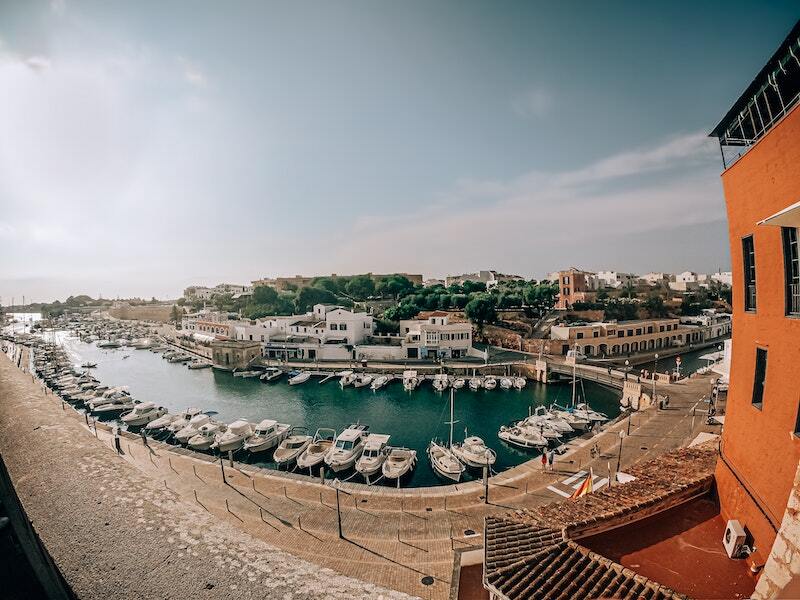
The choice between a motor and a sailing yacht in Spain should depend on the skipper’s skills. Sailing skills do not appear out of thin air, and sail demands serious training and ability. Sailing a yacht mostly under engine and raising the sail just for show when the wind is behind you is, you will agree, odd and absurd. So if you know how to handle sails, you are completely free to choose and can go by your own preferences and experience. Otherwise it is better to look at motorboats.
Even so, both motor and sailing yachts have their pros and cons. Motor yachts cost more to maintain simply because they carry more equipment: something always needs servicing or replacing, and the engines themselves need regular routine maintenance and eventually a major overhaul. Fuel consumption also matters a great deal. Many motor yacht owners list frequent queues for fuel and the quite noticeable engine noise among the drawbacks. On the other hand, a motor yacht gives its owner more mobility: it is easier to manoeuvre, does not depend on the weather, and offers more space and comfort on board.
Sailing yachts are cheaper to maintain because they are fitted with simpler and cheaper engines, and in terms of range they easily outdo motorboats. Where sailing yachts lose to motorboats is speed. The average speed of motorboats is 20 knots (although there are sprinters capable of up to 70 knots).
A sailing boat’s normal speed is 5-10 knots. That is not always a drawback, though, given that sailing rests on a philosophy of its own: being at one with nature, the sea and the wind.
The cost of keeping a yacht in Spain
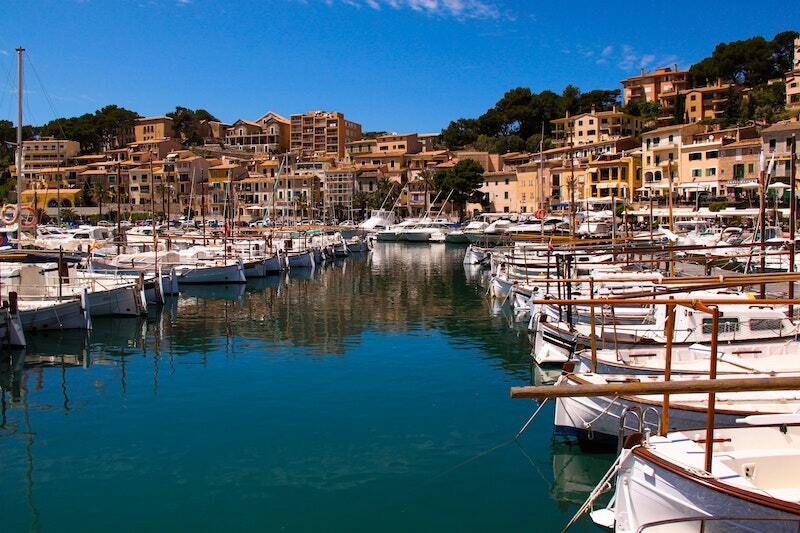
The cost of keeping a yacht in Spain, as in any other country, depends on the size and price of the boat. The compulsory expenses include:
- Berth fees. This cost depends on the size of the boat. In high season, the price of a berth also depends on how busy and how prestigious the port is. The cost of winter storage can be estimated from the area the boat takes up: on average €5 to €50 per square metre per month. Dry dock storage is the most expensive.
- Port mooring fee (Tasa T-5). It is paid by the owner of the sports or pleasure boat. As a rule, the fee is included in the overall berth price, along with water, electricity and other charges.
- Insurance. Third-party liability insurance costs on average up to €300 a year for small motorboats. The premium takes into account the boat’s value, age and engine power. Comprehensive insurance, covering not only third-party liability but also damage to the boat itself, will cost several thousand euros. Sailing boats taking part in regattas need special insurance, which costs about €3,000 a year.
- Annual repairs and maintenance. This covers routine servicing of the boat, inspection and repair of the engine (or engines), checking the rigging for wear, cleaning and painting the hull and so on. This group also includes the costs of opening a new season and launching the yacht: an extra inspection, transporting the boat from the dry dock and so on. Keeping a yacht in Spain is reckoned to cost on average 10% of its value a year.
- Compulsory inspections. Compulsory periodic inspections (Inspecciones periódicas obligatorias (ITB)) apply to boats used for private or commercial purposes: once every five years for boats with a deck longer than 6 m, plus an additional one every 2.5 years for boats with a deck longer than 15 m (for wooden boats, longer than 6 m). The fee depends on the size of the boat. A compulsory inspection costs €200 to €1,000, and an intermediate one €150 to €700.
Finally, do not forget natural depreciation. In the first 8-10 years a boat loses 40-50% of its value.
A yacht in Spain: buy or charter?
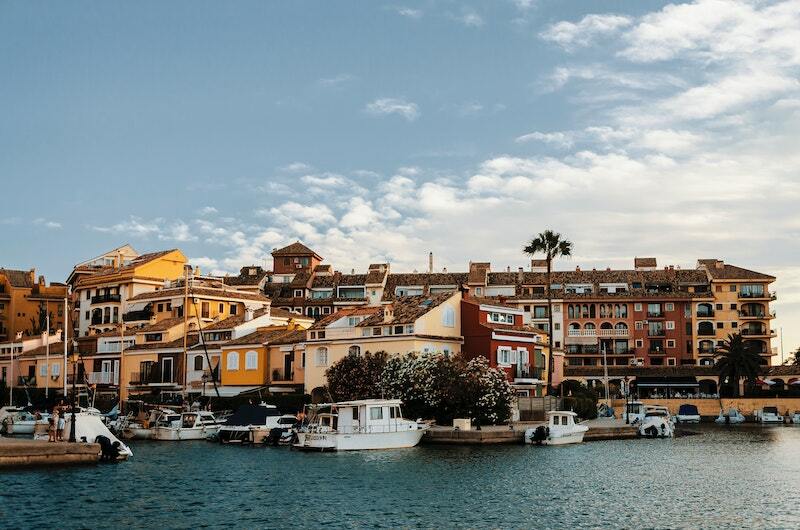
Yacht charter in Spain is in great demand, and there is a simple explanation: the charterer can enjoy a yacht trip whenever it suits them and at minimal cost, without giving a moment’s thought to dull matters such as taxes, running costs, repairs and other expenses. On the Costa Blanca, hiring a small motorboat without a skipper costs from €200 a day. A small sailing boat 12-15 m long can be chartered from €300 a day, a motor yacht for 8 people from €400 a day, and a luxury yacht with several cabins from €2,000 a day.
Chartering a yacht, like hiring a car or renting property, requires a deposit. If the boat is returned to the owner undamaged, the charterer gets the deposit back straight away.
As a rule, a yacht is chartered by a group, so the final price per person is quite affordable. For half a day or a day, people charter a yacht for a simple trip along the coast, to watch the sunrise or sunset, or for sea fishing. A charter of several days is enough for a longer voyage, for example a cruise around the Balearic or Canary Islands.
If you hold a skipper’s licence, you can sail the yacht yourself; otherwise you will have to charter it with a skipper and, in the case of a large boat, with a crew as well.
In any case, chartering a yacht in Spain is ideal for those who plan occasional trips and want to avoid a large outlay and regular extra costs.