Rincón de la Victoria is a small resort town 12 km from the centre of Málaga. Locals often call it simply El Rincón. Although it is an independent municipality, the town is seen as just another district of Málaga, practically merging with its eastern suburbs.
Area and population of Rincón de la Victoria
The municipality is small, just over 28 km². By population (51,300 residents in 2023, of whom 3,600 are foreign nationals), Rincón de la Victoria ranks ninth in the province of Málaga. The largest foreign community is Italian, but many British, German and Scandinavian people also live in the town.
The town’s layout is far from classic: there is no single historic centre with old districts next to it and a newer periphery. El Rincón is made up of four villages: three on the coast (La Cala del Moral, Rincón de la Victoria and Torre de Benagalbón) and one 3 km from the sea (Benagalbón).
To the north, the municipality is sheltered from winds and heavy rain by the mountains of the large Montes de Málaga natural park. The coastline is a series of sandy beaches and rocky stretches. El Rincón has 7 km of coast, from the river Totalán in the west (the natural boundary with the municipality of Málaga) to the Santillán stream in the east (the boundary with the municipality of Vélez-Málaga).
Transport and distances to nearby towns
Public transport in the town consists of taxis and buses. Municipal routes connect all the main villages and estates, and intercity routes let you get quickly to Málaga International Airport and the university.
Nearest airports:
- Málaga Airport: 29 km;
- Gibraltar Airport: 152 km;
- Murcia Airport: 374 km;
- Alicante Airport: 465 km;
- Madrid Airport: 554 km.
Málaga and Madrid are connected by a high-speed railway: a one-way journey takes just 2 h 45 min. Local trains also run from Málaga to the neighbouring resort towns.
The main roads are the N-340a, which becomes the MA-24, and the Mediterranean motorway A-7 (E15).
Distances from Rincón de la Victoria to the nearest towns and resorts of the Costa del Sol:
- Málaga centre: 12 km
- Benalmádena: 39 km;
- Fuengirola: 51 km;
- Mijas: 52 km;
- Marbella: 79 km;
- Puerto Banús: 85 km;
- Benahavís: 97 km;
- Estepona: 108 km.
Weather in Rincón de la Victoria
Rincón de la Victoria, on Spain’s Mediterranean coast, has the climate typical of this part of the country: little rain and a mildly cool winter, followed by a warm, bright spring and then a hot summer. Autumn and the mild late season are a great time for a beach holiday, although many tourists are also drawn by the hottest month, August, when daytime temperatures stay consistently above +30°C and the sea warms up to +23°C and higher.
Rain is infrequent in the northern part of the Costa del Sol; it mostly comes in season, and dry, clear weather can last for weeks. This is ideal for sport: from all kinds of water sports to mountain hiking, cycling, climbing and golf.
History of Rincón de la Victoria
Ancient tribes settled the entire Mediterranean coast of Spain as early as the Late Palaeolithic. This is shown by numerous archaeological finds, in particular the cave paintings found in the Cueva de la Victoria.
Among later peoples, historians mention the Iberians, Phoenicians, Romans and Visigoths. The old rowing boats called jábegas, once used for fishing and still found all along the Málaga coast as living witnesses of history, traditionally have an eye painted on them, just as the Phoenicians did dozens of centuries ago.
The Romans who came to Málaga actively developed trade and crafts, grew grapes for raisins and wine, and produced olive oil and their famous fish sauce, garum. Remains of Roman villas and production buildings have been found in almost every coastal town in the province. In Rincón de la Victoria, in the Torre de Benagalbón area, you can see the remains of a Roman mosaic and ancient baths.
In the 1st century AD a fortress surrounded by residential quarters stood on the site of today’s El Rincón. In the Arab era the settlement already had the status of a town and was called Bezmiliana. The first centuries after the Reconquista saw an economic decline across the region. The main cause of trouble was pirates, whose frequent devastating raids terrified the local people, forcing them to leave their homes and move their families away from the coast into the mountains. This is how the settlement of Benagalbón came about; today it is part of the municipality as the district furthest from the sea.
Active resettlement of the coast began only in the 19th century. It was then that the village got the name Rincón de la Victoria, from the monastic order based in the Monasterio de la Victoria in Málaga. In the early 20th century industry developed rapidly in Málaga, railways were built, and passenger and freight traffic grew. By the mid-20th century tourism had come to the fore: Málaga and the whole coast of the province, including El Rincón, saw extensive building, infrastructure expanded and the services and entertainment sector grew rapidly.
The legacy of the Romans
One of the main sights of Rincón de la Victoria is Villa Antiopa, a fairly well-preserved Roman town in the northern part of the municipality, Torre de Benagalbón. Archaeologists date it to the 8th-3rd centuries BC. In 2008 the Andalusian Government added this monument to the Register of Cultural Heritage. The baths, remains of walls, mosaic floors and the production rooms where fish was fermented to make garum sauce have survived to this day. Excavations also uncovered remains of sculptures and pottery from the Phoenician and Roman periods.
Caves: Cueva de la Victoria and Cueva del Tesoro
Rincón de la Victoria has a whole network of caves more than 2 km long, divided into two areas that can be visited separately. The Cueva del Tesoro is a unique sea cave, the only one in Europe and one of three in the world. It originally included three halls: Cueva del Higuerón, Cueva del Suizo (or Sala del Lago) and Cueva de la Victoria.
After clearing works, the first two halls, Cueva del Higuerón and Cueva del Suizo with its underground lake, were joined into one called Sala de la Virgen. It has comfortable walkways and attractive lighting, and concerts and shows are held here regularly. There are no special requirements for visitors.
The Cueva de la Victoria is a different matter. It is the oldest and most difficult part of the caves, where prehistoric cave paintings were found. For the 2-hour guided tour of the Cueva de la Victoria you will need shoes with non-slip soles. Helmets with lamps are handed out at the entrance.
You can combine a cave visit with a walk in the nearby Parque Arqueológico del Mediterráneo. The park is interesting for its collection of native plants. You can also see a copy of the cave painting that has become the emblem of the Rincón de la Victoria cave complex.
Town sights and historic buildings of Rincón de la Victoria
The Bezmiliana Fort (Fortaleza de Bezmiliana) is the main symbol of Rincón de la Victoria. Construction of the fort began in 1766 on the orders of King Charles III. The threat from Gibraltar and the bitter military conflict with the English made it necessary to strengthen the defence of the Málaga coast and to station a permanent garrison able to repel enemy attacks at any moment. Today the fort serves as an exhibition hall. Next to it is a small park with a fountain and the town’s most unusual sculpture: The Abduction of Europa by Zeus, made of bronze and weighing 2.6 tonnes.
Two 14th-century towers from the period of Muslim rule have survived in Rincón de la Victoria; they served as lookout posts over the sea. One tower stands in the Playa de Rincón de la Victoria area, the other in Torre de Benagalbón.
The town also has several small, beautiful churches that are well worth a visit. And during your walk around town, don’t miss the main square, Plaza Al-Ándalus, and the seafront promenade, Paseo de la Marina, which runs along the main town beach.
Playa de Rincón de la Victoria and Playa Cala del Moral are separated by a small rocky headland, another interesting place for a walk. In the early 20th century a railway line was built here connecting Málaga and Vélez-Málaga. The line was in use until the late 1960s and was then dismantled. Today the old railway track has become the “Green Route”, which winds along the headland and passes through several tunnels.
Beaches of Rincón de la Victoria
Rincón de la Victoria has four sandy beaches and several picturesque rocky coves. The municipality’s coastline is more than 7.5 km long in total. Promenades run along all the beaches, with a good choice of bars and restaurants. The beaches themselves are clean and well equipped, with all the necessary facilities and services, from sunshade and sunbed hire to lifeguards, ramps, water fountains and so on.
Playa de los Rubios
The most secluded beach is in the east of the municipality, near the Los Judíos estate on the border with Vélez-Málaga. This is Playa de los Rubios, a sandy beach more than 1 km long, very quiet and not overcrowded even at the height of summer. The beach slopes gently into the sea, which makes it safe for children. There are bars nearby, and pedal boats can be hired on the beach itself. An eco-trail runs along the beach, and just a couple of minutes’ walk away is La Cerresuela park, whose viewpoints offer stunning views.
Playa de Torre de Benagalbón
Playa de Torre de Benagalbón is a beach of dark grey sand that stretches along the district of the same name. Above it rises one of the old lookout towers built during the period of Arab rule. It is easy to get here both by car and on foot. Most of the beachgoers are residents of the nearby estates and families with children. The golf courses of the Añoreta club come almost right up to the shore.
Playa de Rincón de la Victoria
The main town beach, Playa de Rincón de la Victoria, is more than 2.5 km long. The Paseo de la Marina promenade runs along it, with many bars, cafés, restaurants and shops. This is the busiest beach in the municipality: at the height of the season it can be very hard to find a free spot. And it is here that the championship of traditional jábega rowing boats is held every year.
Playa de la Cala del Moral
The westernmost beach of Rincón de la Victoria is Playa de la Cala del Moral. It is more than 1 km long and lies on the border with Málaga. The beach is mostly sandy, with a few stony patches. It gets busy, as the densely populated district of La Cala del Moral is nearby. The Paseo Blas Infante promenade runs along the beach, and just a 5-minute walk away are the Mediterranean Archaeological Park and the entrance to the Cueva de la Victoria and Cueva del Tesoro caves.
Property in Rincón de la Victoria
Property in Rincón de la Victoria is in demand, helped by its proximity to Málaga, the capital of the province of the same name and a major transport hub in Andalusia. At the same time, Rincón de la Victoria is a quiet, peaceful town with moderate traffic, less crowded beaches and fewer tourists.
In December 2023 the price of housing in Rincón de la Victoria was €2,574/m². This is 2.2% higher than in November, 4.8% higher than in September and 17.5% higher than in December 2022. The biggest price rises were in two districts: La Cala del Moral (+16.8% over the year) and Playa del Rincón (+25.8% over the year). This is close to the figures for neighbouring Málaga, where housing costs €2,668/m² and prices rose by 14.1% over the year.
The most expensive and prestigious districts are considered to be Torre de Benagalbón, Playa del Rincón and Lo Cea – Los Cortijos. The most affordable district is Benagalbón, the furthest from the sea and the beaches.
In Rincón de la Victoria you can buy a home from €125,000. Sellers may ask this price either for a studio with a sea view or for a 2-bedroom apartment far from the sea. A 3-bedroom apartment costs €160,000-190,000 on average. Townhouses and semi-detached houses start at €240,000. A detached house with good views can be bought from €340,000. Country houses and small villas start at €550,000, and large mansions at €1,000,000.
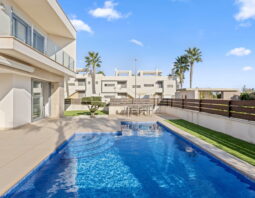
New-build homes in Rincón de la Victoria are available from €185,000. Modern terraced developments are actively being built in the town, where each apartment gets maximum sunlight and does not block its neighbours’ views. On the new-build market you can also find townhouses from €533,500.