Calpe is a small resort town on the northern Costa Blanca. Calpe has a population of around 30,000. In the high season, however, when foreign tourists and Spanish holidaymakers arrive, the population grows five- to sixfold.
Calpe’s landmark is the Peñón de Ifach, a rock that juts almost a kilometre out to sea and forms two large bays: Arenal-Bol and La Fossa. Rock climbers and mountain walkers come to Calpe from all along the coast and even from neighbouring regions.
Those who enjoy a quiet holiday and good food are drawn by other attractions: the famous fish market, which operates all year round, and the superb fish restaurants around the port, whose reputation has long since spread far beyond Spain.
And, of course, Calpe is very popular with investors: demand for property in Calpe and the surrounding area always stays consistently high.
Calpe: how to get there, climate and weather
Calpe is about 75 km from Alicante-Elche International Airport and 62 km from Alicante, the capital of the province of the same name. You can travel from Calpe to Alicante by car, by train (changing at Benidorm) or by bus. Depending on the route you choose, the journey takes one to two hours.
Calpe is linked to the neighbouring resort towns by a convenient road network: the N-332 and the A-7 and AP-7 motorways. The nearest major transport hubs to Calpe are in Alicante (port and railway station), Dénia (a port with ferries to the Balearic Islands) and Valencia (port, railway station and international airport).
Calpe, like the whole of the Costa Blanca, is famous for its good weather. The subtropical Mediterranean climate brings plenty of sunny days, no sharp swings in temperature, mild, fairly cool winters and, most importantly, a long swimming season. In August the sea warms up to +27 degrees, and in small, shallow coves it can reach +30.
Where to live in Calpe: areas for buying property

Like any resort town, Calpe combines high-rise and low-rise buildings. Residential tower blocks and hotels traditionally cluster close to the coast, the promenades and the beaches. The further you go from the coast towards the mountains, the more gated developments you find, where the low-rise homes are bungalows, townhouses, houses and villas. Building work in Calpe is still going strong, so many of the properties on the market are new builds.
Both apartments and detached family homes are in high demand. Apartments with terraces and views of the sea or the mountains are ideal for short stays, holidays and holiday lets. Townhouses and houses are usually chosen by families for whom Calpe becomes their permanent home.
The most expensive apartments are those with panoramic views of the coast and the Peñón de Ifach from their windows and terraces. The price of such homes can exceed €3,000/m². These are the areas of Playa de Fossa-Levante, Playa Arenal-Bol and Puerto, which make up the town’s resort and tourist zone. This is also where you will find the hotels, the best fish restaurants and superb promenades full of shops and souvenir stalls. This part of Calpe has the most expensive studios and apartments, intended above all for short-term letting. Many properties already have a holiday rental licence.
You can, of course, live in Playa de Fossa-Levante and Puerto all year round, but then you will have to put up with the round-the-clock noise and bustle of the seafront. In Playa de Fossa-Levante the only way to escape the noise is to choose a home overlooking Las Salinas. Playa Arenal-Bol, meanwhile, though the most expensive and prestigious area, is better suited to permanent living: there are fewer tourists and more peace and quiet. New building is also still going on in this area, so you can choose between resale and new-build property and look for the ideal balance of price and quality.

The most expensive family homes are in the south-west of Calpe. The picturesque Manzanera-Tosal area stretches along the coast; on one side it borders Calpe Pueblo, home to the town’s historic centre, and on the other, Canuta. It is one of the areas where demand for residential property always exceeds supply.
The most prestigious urbanizaciones in this part of Calpe are La Manzanera and El Tossal, with beautiful views of the sea and the coast from almost every point. The neighbouring Canuta area, home to the Puerto Blanco marina, also attracts strong interest from investors. The Maryvilla urbanización, which rises in terraces on the slopes of the Sierra de Toix, has traditionally attracted buyers from Russia and other former Soviet republics. Properties here are mostly expensive, large and with their own plots. As a rule, buying such a property (over €500,000) gives you the right to a Golden Visa. All the infrastructure you need for comfortable living and leisure is concentrated closer to the sea and the town centre: shops, cafés and restaurants, banks, pharmacies, colleges, medical centres and so on.
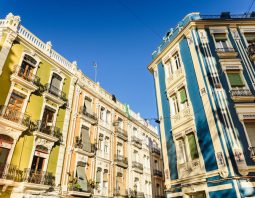
In Calpe Pueblo buyers will find a good choice of flats, although most of them are in older buildings. An inexpensive flat in need of renovation can make an excellent investment property. As in any other town, living in the centre means you do not need your own car, since all shops, administrative, service and financial offices are within walking distance.
The north-west of the town, by contrast, offers relatively affordable homes. Take a look at Gargasindi, Cometa-Carrió and Oltamar-Cucarres. Gargasindi and Cometa-Carrió are built up with urbanizaciones and detached houses. Property here is very often bought as a permanent home. Oltamar-Cucarres is similar to Manzanera-Tosal, the only difference being that it has no access to the sea and lies quite far from the coast. Like its more expensive counterpart, it is built up with houses and villas.
At the beginning of June 2021, the price per square metre of homes in Calpe by area was as follows:
| Area | Price per m², € | Lowest resale prices, € |
| Calpe, all areas | 2,404 | |
| Cometa-Carrió | 2,541 | 85,000 – 95,000 for a 1-bedroom apartment |
| Calpe Pueblo | 1,786 | 50,000 – 55,000 for a studio or 1-bedroom apartment |
| Playa de Fossa-Levante | 2,619 | 65,000 – 75,000 for a 1-bedroom apartment |
| Playa Arenal-Bol | 3,185 | 90,000 – 95,000 for a studio and 95,000 – 105,000 for a 1-bedroom apartment |
| Gargasindi | 2,056 | 120,000 for a 1-bedroom apartment |
| Canuta | 2,635 | 115,000 for a 1-bedroom apartment, 125,000 – 145,000 for a 2-bedroom apartment |
| Puerto | 2,703 | 105,000 for a studio, 110,000 – 130,000 for a 1-bedroom apartment |
| Manzanera-Tosal | 2,316 | 105,000 – 115,000 for a 1-bedroom apartment |
| Maryvilla | 2,446 | 190,000 – 210,000 for bungalows and townhouses |
| Oltamar-Cucarres | 2,444 | 195,000 – 220,000 for townhouses |
Calpe’s beaches and sights

The whole Costa Blanca is lined with sandy and pebble beaches alternating with secluded rocky coves. Calpe has 11 kilometres of beaches, the best of which are considered to be the sandy Arenal-Bol, La Fossa (Levante) and Cantal Roig, as well as the sand-and-pebble Puerto Blanco next to the well-known yacht club. Calpe’s wide, well-equipped town beaches receive the highest quality award, the Blue Flag, every year. Close by there is all the infrastructure you need for a holiday, including bars and restaurants.
As for the coves, the most remarkable are Collao, Racó del Corb and Gasparet, favourite spots for divers. Ordinary holidaymakers looking for peace and seclusion away from the noisy, crowded town beaches choose the coves of Calalga, Mallorquí, Manzanera, Racó and Morelló. The most secluded coves, surrounded by steep cliffs, can only be reached by water.
As we mentioned above, one of Calpe’s main attractions is the fish market. It opens every day at three in the afternoon, when hundreds of large and small fishing boats return to town with their catch. Half an hour to an hour later, the seafood is already being cooked in the kitchens of the restaurants closest to the port. In all, Calpe and its outskirts have more than 160 restaurants, most of which serve Mediterranean cuisine.

A visit to the viewpoint on the Peñón de Ifach is also a must for every visitor to the town. On a perfectly clear day you can see Ibiza from it, but even if you cannot, you will still be rewarded with superb panoramic views of the coast. Part of the way to the viewpoint runs through a tunnel cut into the rock. On particularly steep and slippery stretches you will have to hold on to ropes. The rock itself and the waters around it are a protected natural park. In summer, catamaran trips are organised to the foot of the rock.
Another of Calpe’s sights is its salt lakes. Las Salinas de Calpe have been used for extracting sea salt since ancient times. Today the salt lakes are a nesting site for many species of birds. Among them are flamingos, a favourite subject for tourists’ cameras, as well as storks and white egrets.
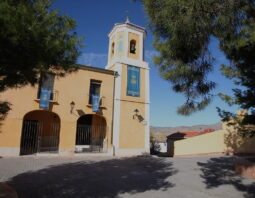
Calpe is an old town that has kept the remains of an ancient defensive wall built back in the days of Moorish rule on the Iberian Peninsula. The old part of the town has two 18th-century chapels, the 19th-century Torre Molí del Morelló mill and two churches. The Romans left the town the Baños de la Reina baths. Museum lovers will appreciate the Ethnological and Archaeological Museums, the Museum of Festive Costumes, the Museum of Collectibles and the Museum of Lithography.
One modern building can also be counted among Calpe’s special sights: the striking La Muralla Roja residential complex. It is a top location for local photographers and camera operators. The much-loved company Dzintars, which is in the process of a revival, recently shot its new advertisement in this complex.